Tiny Tapeout GF 0.2Die TTPG on wafer.space Run 1: the power-gated edition
52 projects on one chip, measured one by one and as a whole die
Buy this chipPut your design on the next oneAll its projects on tinytapeout.com
What was built
The chip as a whole: what its projects add up to.
This is the power-gated edition of Tiny Tapeout GF 0.2: it can switch off the power to the projects that are not selected. The same 52 projects were also made on the standard edition, without the power switches.
52
Projects
on the chip
52
Open source
with a public repository
2.8M
Transistors
across the unique designs
197k
Logic cells
gates and flip-flops
Counted inside the projects only, so these totals are smaller than the die's own figures on its run's page: the pads, Tiny Tapeout's multiplexer and controller, the power switches and the fill are left out.
Get this chip, or make your own
Tiny Tapeout puts many small designs on one chip. Start with a tile, then come back with a whole die.
Get this chip
It comes on a board you can plug in, with every project on it ready to try.
Buy this chipPut your design on the next one
Tiny Tapeout GF 26c and 26d take projects until 7 December 2026, to be made on wafer.space Run 3.
Submit a projectMake a whole chip of your own
When a design outgrows a few tiles, it can have a die to itself on wafer.space Run 3: orders close 9 December 2026.
Reserve a slotThe die
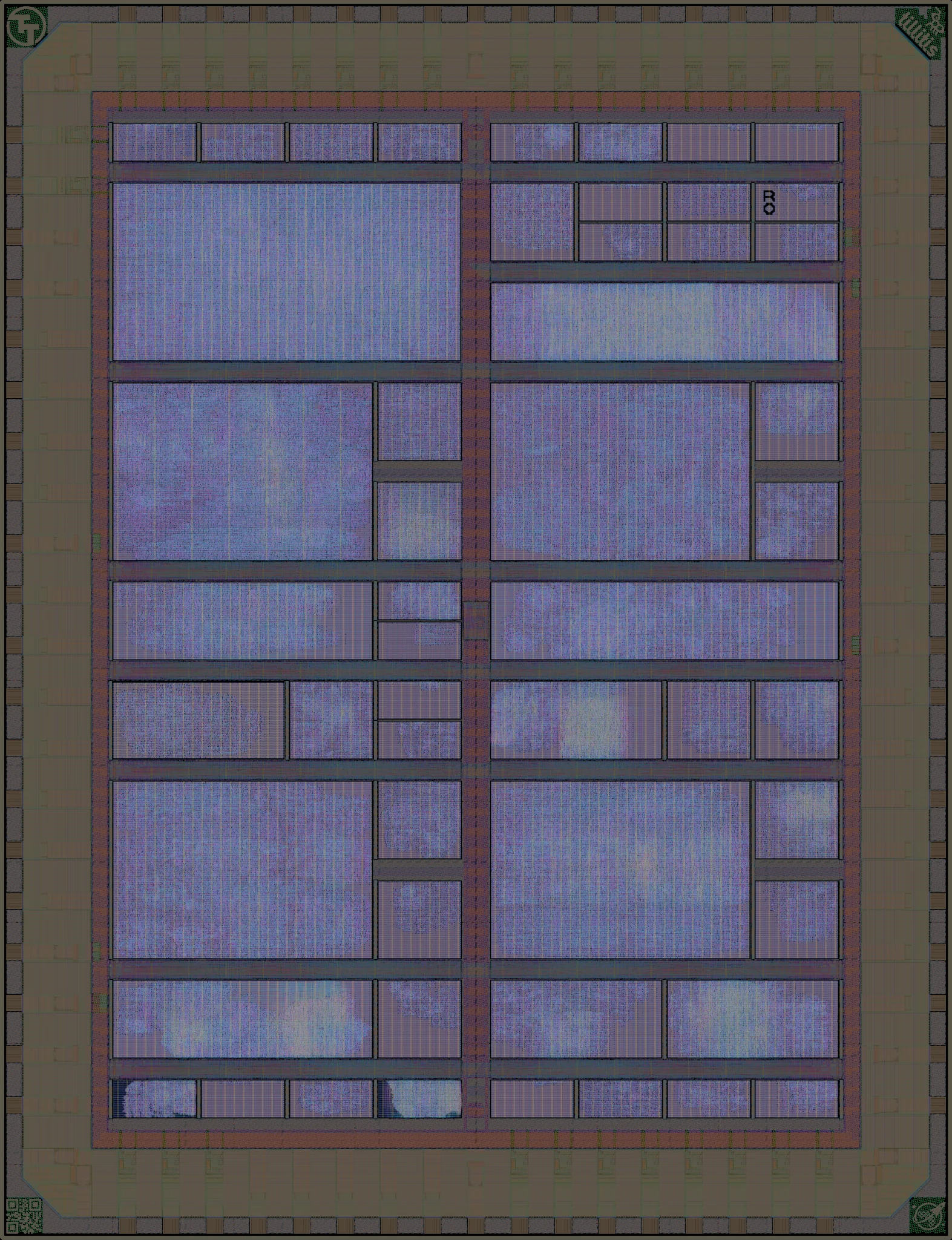
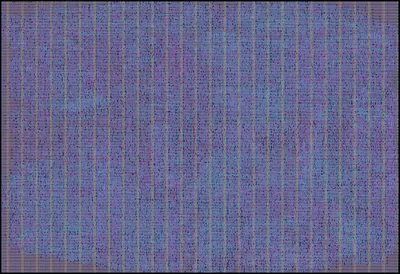
Every design rendered from the layout at the same scale and placed where it sits on the 3.9 × 5.1 mm die. Point at a project to see its name, and select it for its details.Every project is listed further down.
Project sizes
How many tiles each project took. A tile is the smallest piece of a Tiny Tapeout chip you can submit a design to.
| 1 × 1 tiles | 26 |
| 1 × 2 tiles | 13 |
| 2 × 2 tiles | 4 |
| 3 × 2 tiles | 2 |
| 3 × 4 tiles | 4 |
| 4 × 2 tiles | 2 |
| 4 × 4 tiles | 1 |
| Total | 52 |
|---|
Shuttle status
Two schedules meet here: Tiny Tapeout collects the projects and builds the die, then wafer.space manufactures it on wafer.space Run 1 and ships the parts.
Done so far
- Tiny Tapeout 24 November 2025 Tiny Tapeout GF 0.2 submissions close Last day to submit a project to this Tiny Tapeout shuttle
- wafer.space 28 November 2025, 23:59 AoE Purchase deadline Final deadline to purchase manufacturing slots, for whole-die slots on the run (not Tiny Tapeout projects)
- wafer.space 3 December 2025, 23:59 AoE Design submission Final deadline to submit GDS files for fabrication
- Tiny Tapeout 11 December 2025 Tiny Tapeout GF 0.2 tapeout release Tiny Tapeout publishes the die's layout (tapeout-ws2512-powergate) and sends it to wafer.space
- wafer.space 8 January 2026 Tape-out to GlobalFoundries GDS files delivered to GlobalFoundries for fabrication
- wafer.space 6 April 2026 Wafers returned Wafers back from GlobalFoundries
- wafer.space 10 April 2026 First wafers diced The first wafers cut into individual dies
- wafer.space 17 April 2026 Remaining wafers diced The rest of the wafers diced
- wafer.space 20 April 2026 First dies sorted Dies picked from the first wafers for the first shipments
- wafer.space 21 April 2026 First bare dies shipped Initial bare dies shipped to customers
- wafer.space 25 April 2026 First packaged parts shipped Initial chip-on-board packaged parts shipped
- wafer.space 4 May 2026 Bare dies shipped Sorted dies from the main batch of wafers shipped
Still to come
- Today, 24 October 2026
- wafer.space 31 October 2026 (expected) Packaged parts shipped Chip-on-board packaged parts from the main batch of wafers shipped
- wafer.space 5 November 2026 (expected) Last bare dies shipped Sorted dies from the last wafers shipped
- wafer.space 5 December 2026 (expected) Last packaged parts shipped Chip-on-board packaged parts from the last wafers shipped
Missed this one? Tiny Tapeout GF 26c and 26d take projects until 7 December 2026: submit a project.
From the wafer.space run schedule and the Tiny Tapeout GF 0.2 repository.
How people used their silicon
Where the area of 52 projects (10 mm² of silicon) actually went
- Logic cells 58% — gates and flip-flops doing the design's actual work
- Filler and tap cells 38% — inserted by the tools to keep rows continuous and wells tied
- Other 4% — routing channels, analog and custom layout, power grid and empty space
What people built
The kinds of design on this chip.
Other digital 25 Retro computing 7 Games 6 RISC-V and CPUs 6 Communications 3 Art and logos 2 First designs 1 Security 1 Test structures 1Area budget of every design
Each bar is one project, split the same way as above. Sorted by how much of the project is logic.
Show all 52 projects
What fits on 1 mm² of GF180MCU silicon?
Theoretical maximum against what designers achieved
The maximum packs one cell type edge to edge with no room for wiring. Real designs need the wiring. Each box gives the most of a cell that fits with any GF180MCU library, then with the libraries this chip used.
21k
Typical project
median logic cells/mm² of core across 36 digital projects (1,000 or more logic cells)
61% of the core covered by logic cells
Percentages compare with the buffer maximum for each design's own library: buffers are among the smallest and most common logic cells, so a design made only of buffers, packed edge to edge with no wiring, would reach 100%.
Sizing your own design
What each tile size held on this chip, and what it would hold at its densities
| Logic cells in its digital projects1,000 or more logic cells | Logic cells at this chip's density | Theoretical maximum, 7t-5V cells | |||||||
|---|---|---|---|---|---|---|---|---|---|
| Tiles | Size | Core area | Projects | Most | Median | Typical21k / mm² | Best28k / mm² | NAND gatesnand2_1 | Flip-flopsdffq_1 |
| 1 × 1 | 0.35 × 0.16 mm | 0.06 mm² | 26 | 1.5k | 1.2k | 1.2k | 1.6k | 5.1k | 880 |
| 1 × 2 | 0.35 × 0.33 mm | 0.12 mm² | 13 | 2.9k | 2.2k | 2.4k | 3.3k | 10.5k | 1.8k |
| 2 × 2 | 0.71 × 0.33 mm | 0.23 mm² | 4 | 4.9k | 4.3k | 4.9k | 6.7k | 21.3k | 3.7k |
| 3 × 2 | 1.08 × 0.33 mm | 0.36 mm² | 2 | 8.8k | 7.3k | 7.4k | 10.1k | 32.5k | 5.6k |
| 3 × 4 | 1.08 × 0.74 mm | 0.80 mm² | 4 | 22.7k | 18.7k | 16.6k | 22.7k | 72.8k | 12.6k |
| 4 × 2 | 1.44 × 0.33 mm | 0.48 mm² | 2 | 11.0k | 10.4k | 9.9k | 13.5k | 43.3k | 7.5k |
| 4 × 4 | 1.44 × 0.74 mm | 1.07 mm² | 1 | 20.3k | 20.3k | 22.2k | 30.3k | 97.1k | 16.7k |
Swipe the table sideways for more columns.
Core area is the whole project. "Typical" and "best" multiply the core area by this chip's median and best core densities; SRAM and analog blocks take their area out of that. The theoretical maxima fill the core with nothing but that one cell of 7t-5V, the library most used on this chip, edge to edge with no routing.
Pick the tile size your design needs when you submit it to the next Tiny Tapeout chip, by 7 December 2026.
Logic density of every digital design
A digital project here is one with 1,000 or more logic cells. Solid bar: average over the core. Outlined bar: the densest 0.1 mm square outside SRAM, per mm² (a dash where memory covers most of the design). The scale ends at the buffer theoretical maximum (76k cells/mm²). The numbers are core / densest, in logic cells per mm².
Show all 36 digital projects
Every digital project's densities as a table
| Project | Tiles | Library | Logic cells | Inside core per mm² |
Densest 0.1 mm square per mm² |
Core covered | Core mm² |
|---|---|---|---|---|---|---|---|
| SCµM-BLE-RX 101 | 3 × 4 | 7t-5V | 22,709 | 28,415 | 39,300 | 74% | 0.80* |
| Simon Says memory game 519 | 1 × 1 | 7t-5V | 1,507 | 26,911 | 38,200 | 70% | 0.06* |
| WokwiPWM 547 | 1 × 1 | 7t-5V | 1,481 | 26,446 | 32,600 | 69% | 0.06* |
| USB CDC (Serial) Device 130 | 1 × 2 | 7t-5V | 2,943 | 25,481 | 34,000 | 78% | 0.12* |
| TinyQV RISC-V SoC 039 | 3 × 4 | 7t-5V | 20,084 | 25,130 | 36,900 | 74% | 0.80* |
| PRISM 8 with TinySnake 579 | 1 × 1 | 7t-5V | 1,401 | 25,018 | 32,900 | 69% | 0.06* |
| megabytebeat 391 | 3 × 2 | 7t-5V | 8,785 | 24,649 | 42,000 | 62% | 0.36* |
| Classic 8-bit era Programmable Sound Generator SN76489 513 | 1 × 1 | 7t-5V | 1,380 | 24,643 | 35,600 | 69% | 0.06* |
| Notre Dame - Lockpick Game TT Example 288 | 1 × 2 | 7t-5V | 2,722 | 23,567 | 28,800 | 71% | 0.12* |
| 2x2 MAC Systolic array with DFT 129 | 1 × 2 | 7t-5V | 2,711 | 23,472 | 35,500 | 64% | 0.12* |
| Simple RISC-V 359 | 4 × 2 | 7t-5V | 11,000 | 23,148 | 32,800 | 78% | 0.48* |
| VGA Nyan Cat 199 | 1 × 2 | 7t-5V | 2,662 | 23,048 | 34,700 | 63% | 0.12* |
| Zedulo TestChip1 032 | 1 × 1 | 7t-5V | 1,242 | 22,179 | 31,000 | 69% | 0.06* |
| Video mode tester 611 | 1 × 1 | 7t-5V | 1,234 | 22,036 | 27,100 | 73% | 0.06* |
| Flame demo 545 | 1 × 1 | 7t-5V | 1,230 | 21,964 | 30,900 | 61% | 0.06* |
| LISA 8-Bit Microcontroller 197 | 3 × 4 | 7t-5V | 17,231 | 21,560 | 32,300 | 62% | 0.80* |
| Simon's Caterpillar 103 | 1 × 2 | 7t-5V | 2,486 | 21,524 | 31,600 | 62% | 0.12* |
| Zilog Z80 455 | 2 × 2 | 7t-5V | 4,918 | 20,990 | 33,500 | 61% | 0.23* |
| Silly-Faust 102 | 4 × 2 | 7t-5V | 9,814 | 20,652 | 35,800 | 56% | 0.48* |
| raybox-zero TTGF0p2 edition 135 | 3 × 4 | 7t-5V | 16,500 | 20,646 | 35,100 | 59% | 0.80* |
| PVTMonitorSuite 551 | 1 × 1 | 7t-5V | 1,123 | 20,054 | 31,500 | 55% | 0.06* |
| 2048 sliding tile puzzle game (VGA) 194 | 2 × 2 | 7t-5V | 4,680 | 19,974 | 38,100 | 54% | 0.23* |
| ROTFPGA v2 481 | 1 × 2 | 7t-5V | 2,269 | 19,645 | 30,900 | 53% | 0.12* |
| VGA Tiny Logo 515 | 1 × 1 | 7t-5V | 1,095 | 19,554 | 34,700 | 51% | 0.06* |
| wafer.space Logo VGA Screensaver 033 | 1 × 2 | 7t-5V | 2,228 | 19,290 | 27,300 | 53% | 0.12* |
| KianV uLinux SoC 295 | 4 × 4 | 7t-5V | 20,266 | 19,018 | 28,000 | 58% | 1.07* |
| Dog Battle Game 549 | 1 × 1 | 7t-5V | 1,047 | 18,696 | 27,200 | 48% | 0.06* |
| Notre Dame - CSE 30342 - DIC - Advanced FSM Final Project Example 358 | 1 × 2 | 7t-5V | 2,044 | 17,697 | 35,400 | 43% | 0.12* |
| Asicle v2 451 | 2 × 2 | 7t-5V | 4,018 | 17,149 | 33,900 | 53% | 0.23* |
| Wildcat RISC-V 038 | 3 × 2 | 7t-5V | 5,867 | 16,462 | 33,900 | 48% | 0.36* |
| easy PAL 198 | 1 × 2 | 7t-5V | 1,890 | 16,364 | 26,200 | 61% | 0.12* |
| VGA Drop (audio/visual demo) 134 | 2 × 2 | 9t-5V | 3,625 | 15,472 | 27,200 | 45% | 0.23* |
| Quickscope 196 | 1 × 2 | 7t-5V | 1,718 | 14,874 | 29,400 | 52% | 0.12* |
| LEDs Racer 384 | 1 × 2 | 7t-5V | 1,315 | 11,385 | 31,300 | 32% | 0.12* |
| CAN Controller for Rocket 454 | 1 × 2 | 7t-5V | 1,218 | 10,545 | 26,400 | 36% | 0.12* |
| Frequency Counter SSD1306 OLED 385 | 1 × 2 | 7t-5V | 1,157 | 10,017 | 30,000 | 27% | 0.12* |
The projects
Every project on this chip: an index, then grouped by what it does. Select one for its layout, its measurements and any die photographs.
Project index
All 52 projects by their address on the chip's multiplexer, with how many tiles each took and how much logic it packs.
| Address | Project | Author | Tiles | What it is | Logic cells | Cells per mm² |
|---|---|---|---|---|---|---|
| 000 | Chip ROM | Uri Shaked | 1 × 1 | Other digital | 236 | 4k |
| 001 | Tiny Tapeout Factory Test | Tiny Tapeout | 1 × 1 | Test structures | 90 | 2k |
| 032 | Zedulo TestChip1 | Zedulo | 1 × 1 | Other digital | 1,242 | 22k |
| 033 | wafer.space Logo VGA Screensaver | Uri Shaked | 1 × 2 | Art and logos | 2,228 | 19k |
| 038 | Wildcat RISC-V | Martin Schoeberl · repository @schoeberl | 3 × 2 | RISC-V and CPUs | 5,867 | 16k |
| 039 | TinyQV RISC-V SoC | Michael Bell · repository @MichaelBell | 3 × 4 | RISC-V and CPUs | 20,084 | 25k |
| 101 | SCµM-BLE-RX | Dingyu Zhou · repository @ZDYnb | 3 × 4 | Communications | 22,709 | 28k |
| 102 | Silly-Faust | Louis Ledoux, Cochard Pierre · repository @Bynaryman | 4 × 2 | Other digital | 9,814 | 21k |
| 103 | Simon's Caterpillar | htfab · repository @htfab | 1 × 2 | Other digital | 2,486 | 22k |
| 128 | VGA clock | Matt Venn · repository @mattvenn | 1 × 1 | Retro computing | 860 | 15k |
| 129 | 2x2 MAC Systolic array with DFT | Julia Desmazes · repository @Essenceia | 1 × 2 | Other digital | 2,711 | 23k |
| 130 | USB CDC (Serial) Device | Uri Shaked · repository @urish | 1 × 2 | Communications | 2,943 | 25k |
| 134 | VGA Drop (audio/visual demo) | ReJ aka Renaldas Zioma, eriQue aka Erik Hemming, Matthias Kampa · repository @rejunity | 2 × 2 | Retro computing | 3,625 | 15k |
| 135 | raybox-zero TTGF0p2 edition | algofoogle (Anton Maurovic) · repository @algofoogle | 3 × 4 | Retro computing | 16,500 | 21k |
| 194 | 2048 sliding tile puzzle game (VGA) | Uri Shaked · repository @urish | 2 × 2 | Games | 4,680 | 20k |
| 196 | Quickscope | Frans Skarman · repository @TheZoq2 | 1 × 2 | Other digital | 1,718 | 15k |
| 197 | LISA 8-Bit Microcontroller | Ken Pettit · repository @kdp1965 | 3 × 4 | RISC-V and CPUs | 17,231 | 22k |
| 198 | easy PAL | Ken Pettit · repository @kdp1965 | 1 × 2 | Other digital | 1,890 | 16k |
| 199 | VGA Nyan Cat | Andy Sloane · repository @a1k0n | 1 × 2 | Retro computing | 2,662 | 23k |
| 288 | Notre Dame - Lockpick Game TT Example | Matthew Morrison · repository @mmorri22 | 1 × 2 | Games | 2,722 | 24k |
| 295 | KianV uLinux SoC | Hirosh Dabui | 4 × 4 | RISC-V and CPUs | 20,266 | 19k |
| 358 | Notre Dame - CSE 30342 - DIC - Advanced FSM Final Project Example | Matthew Morrison · repository @mmorri22 | 1 × 2 | Other digital | 2,044 | 18k |
| 359 | Simple RISC-V | kinako71-2 · repository @urish | 4 × 2 | RISC-V and CPUs | 11,000 | 23k |
| 384 | LEDs Racer | KerCrafter · repository @KerCrafter | 1 × 2 | Games | 1,315 | 11k |
| 385 | Frequency Counter SSD1306 OLED | Pawel Sitarz (embelon) · repository @embelon | 1 × 2 | Other digital | 1,157 | 10k |
| 391 | megabytebeat | proppy · repository @proppy | 3 × 2 | Other digital | 8,785 | 25k |
| 451 | Asicle v2 | htfab · repository @htfab | 2 × 2 | Other digital | 4,018 | 17k |
| 454 | CAN Controller for Rocket | Noritsuna Imamura · repository @noritsuna | 1 × 2 | Communications | 1,218 | 11k |
| 455 | Zilog Z80 | ReJ aka Renaldas Zioma · repository @rejunity | 2 × 2 | Retro computing | 4,918 | 21k |
| 481 | ROTFPGA v2 | htfab · repository @htfab | 1 × 2 | Other digital | 2,269 | 20k |
| 483 | 7-Segment Digital Desk Clock | Samuel Ellicott · repository @sellicott | 1 × 1 | Other digital | 746 | 13k |
| 485 | MarcoPolo | Javier Munoz Saez · repository @javiBajoCero | 1 × 1 | First designs | 726 | 13k |
| 487 | Linear Timecode (LTC) generator | Thomas Flummer · repository @flummer | 1 × 1 | Other digital | 777 | 14k |
| 513 | Classic 8-bit era Programmable Sound Generator SN76489 | ReJ aka Renaldas Zioma · repository @rejunity | 1 × 1 | Other digital | 1,380 | 25k |
| 515 | VGA Tiny Logo | Renaldas Zioma · repository @rejunity | 1 × 1 | Art and logos | 1,095 | 20k |
| 517 | Ring Oscillator (5 inverter) | Darryl Miles · repository @dlmiles | 1 × 1 | Other digital | 61 | 1k |
| 519 | Simon Says memory game | Uri Shaked · repository @urish | 1 × 1 | Games | 1,507 | 27k |
| 545 | Flame demo | Konrad Beckmann & Linus Mårtensson · repository @kbeckmann | 1 × 1 | Other digital | 1,230 | 22k |
| 547 | WokwiPWM | Ken Pettit · repository @kdp1965 | 1 × 1 | Other digital | 1,481 | 26k |
| 549 | Dog Battle Game | Sophus Andreassen · repository @jorgenkraghjakobsen | 1 × 1 | Games | 1,047 | 19k |
| 551 | PVTMonitorSuite | Susumu Yamazaki · repository @zacky1972 | 1 × 1 | Other digital | 1,123 | 20k |
| 577 | PILIPINAS_IC | Alexander Co Abad and Dino Dominic Ligutan · repository @alexandercoabad | 1 × 1 | Other digital | 82 | 1k |
| 579 | PRISM 8 with TinySnake | Ken Pettit · repository @kdp1965 | 1 × 1 | Games | 1,401 | 25k |
| 581 | Register bank accessible through SPI and I2C | Caio Alonso da Costa · repository @calonso88 | 1 × 1 | Other digital | 897 | 16k |
| 583 | Cell mux | htfab · repository @htfab | 1 × 1 | Other digital | 677 | 12k |
| 609 | Super-Simple-SPI-CPU | James Ashie Kotey | 1 × 1 | RISC-V and CPUs | 761 | 14k |
| 610 | Example of Bad Synchronizer | Darryl Miles project from Eric Smith · repository @dlmiles | 1 × 1 | Other digital | 62 | 1k |
| 611 | Video mode tester | htfab · repository @htfab | 1 × 1 | Retro computing | 1,234 | 22k |
| 612 | One Bit PUF | Yimin Gao and Ceylan Morgul · repository @Capulus123 | 1 × 1 | Security | 977 | 17k |
| 613 | DDR throughput and flop aperture test | Darryl Miles project from Eric Smith · repository @dlmiles | 1 × 1 | Other digital | 90 | 2k |
| 614 | Ring osc on VGA | algofoogle (Anton Maurovic) · repository @algofoogle | 1 × 1 | Retro computing | 473 | 8k |
| 615 | GF180MCU loopback tile with input skew measurement | Darryl Miles project from Eric Smith · repository @dlmiles | 1 × 1 | Other digital | 81 | 1k |
Swipe the table sideways for more columns.
Designs that grew
Some designs on this chip have been made many times, on earlier and later Tiny Tapeout chips, and several now have a whole die of their own on a wafer.space run. The ringed marker is this chip.
TinyQV RISC-V SoC
2 × 2 tiles Tiny Tapeout IHP 0.2 · Nov 2024
TinyQV RISC-V SoC
2 × 2 tiles Tiny Tapeout IHP 25a · Mar 2025
TinyQV RISC-V SoC
3 × 2 tiles Tiny Tapeout IHP 25b · Sep 2025
TinyQV - Crowdsourced RISC-V SoC
5 × 4 tiles Tiny Tapeout SKY 25a · Sep 2025
2 projects
8 × 4 tiles, 4 × 4 tiles Tiny Tapeout SKY 25b · Nov 2025
TinyQV RISC-V SoC
3 × 2 tiles Tiny Tapeout GF 0.1 · Nov 2025
TinyQV RISC-V SoC
in a shared block Tiny Tapeout GF 0.2 · Nov 2025
TinyQV RISC-V SoC
3 × 4 tiles wafer.space Run 1 · Dec 2025
3 dies
TQVA ½ × ½ slot, TQVB ½ × 1 slot, TQVC 1 × ½ slot Tiny Tapeout GF 0.3 · Jun 2026
TinyQV RISC-V SoC
4 × 2 tiles wafer.space Run 2 · Jul 2026
4 dies
TQVA ½ × ½ slot, TQVC 1 × ½ slot, TQVD ½ × ½ slot, TQVE ½ × ½ slot
KianV uLinux SoC
8 × 2 tiles Tiny Tapeout 6 · Apr 2024
KianV uLinux SoC
8 × 2 tiles Tiny Tapeout 7 · Jun 2024
KianV RISC-V RV32E Baremetal SoC
3 × 2 tiles Tiny Tapeout IHP 0.2 · Nov 2024
KianV RISC-V RV32E Baremetal SoC
4 × 2 tiles Tiny Tapeout GF 0.1 · Nov 2025
KianV uLinux SoC
in a shared block Tiny Tapeout GF 0.2 · Nov 2025
KianV uLinux SoC
4 × 4 tiles wafer.space Run 1 · Dec 2025
KIAN KianV: A 32-bit RISC-V Linux SoC taped out on GF180MCU
1 × 1 slot Tiny Tapeout IHP 26a · Mar 2026
KianV SV32 TT Linux SoC
8 × 4 tiles Tiny Tapeout GF 0.3 · Jun 2026
KianV uLinux SoC
4 × 4 tiles wafer.space Run 2 · Jul 2026
KIAN KianV: A 32-bit RISC-V Linux SoC taped out on GF180MCU Run 2
1 × 1 slot
raybox-zero
4 × 2 tiles Tiny Tapeout 7 · Jun 2024
raybox-zero TT07 edition
6 × 2 tiles Tiny Tapeout IHP 0.2 · Nov 2024
raybox-zero TTIHP0p2 edition
4 × 2 tiles Tiny Tapeout GF 0.1 · Nov 2025
raybox-zero TT07 edition
in a shared block Tiny Tapeout GF 0.2 · Nov 2025
raybox-zero TTGF0p2 edition
3 × 4 tiles Tiny Tapeout IHP 0.4 · Mar 2026
raybox-zero TTIHP0p4 edition
6 × 2 tiles wafer.space Run 2 · Jul 2026
AMM1 raybox-zero wafer.space run 2 half height
1 × ½ slot
Zilog Z80
2 × 2 tiles Tiny Tapeout IHP 0.2 · Nov 2024
Zilog Z80
2 × 2 tiles Tiny Tapeout 9 · Nov 2024
Zilog Z80
2 × 2 tiles Tiny Tapeout IHP 25a · Mar 2025
Zilog Z80
2 × 2 tiles Tiny Tapeout GF 0.2 · Nov 2025
Zilog Z80
2 × 2 tiles wafer.space Run 1 · Dec 2025
2 dies
HZ80 ½ × 1 slot, RZ80 1 × 1 slot wafer.space Run 2 · Jul 2026
2 dies
HZ80 ½ × 1 slot, QZ80 ½ × ½ slot
Tiny Tapeout tile
Google shuttle
wafer.space die
this chip
Each marker is one version of the design: hover over it or focus it for details, and select it to open its
page. On a phone, the table below lists every one.
As a table
Other digital 25
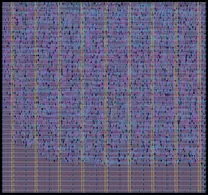
Show all 25 in Other digital
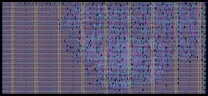
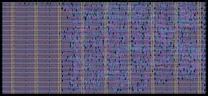
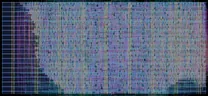
Retro computing 7
Games 6
RISC-V and CPUs 6
Communications 3
Art and logos 2
First designs 1
Security 1
Test structures 1
Die TTPG on wafer.space Run 1
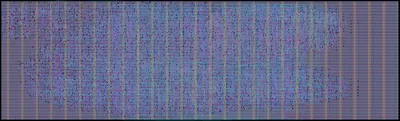
The die as a whole, measured like every other design on its run: its size, pads, process features, density, precheck and photographs. See every design on wafer.space Run 1
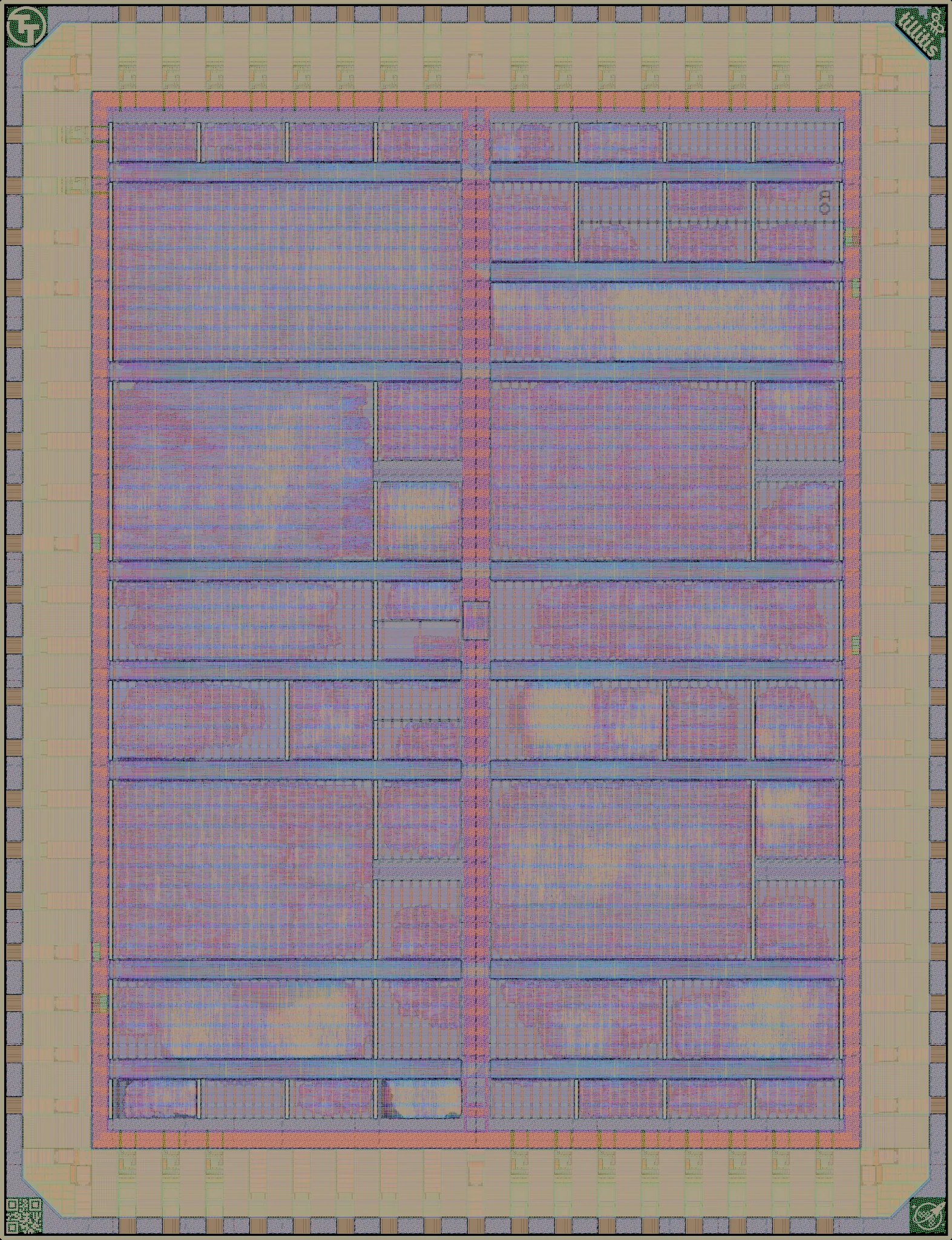
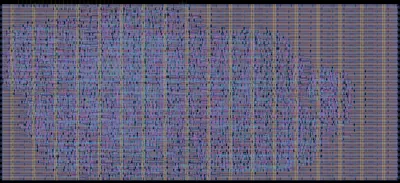
Rendered from the layout at 2.5 µm per pixel. Layers: NwellDiffusionPolysiliconMetal 1Metal 2Metal 3Metal 4Metal 5Top metalPad openings
Logic density
| Inside the core logic cells per mm² | 16k
(21% of buffer maximum) over the 12.90 mm² core: what the design itself packed |
|---|---|
| Inside the seal ring logic cells per mm² | 10k
over all 19.65 mm² of the slot, pad ring included |
| Densest mm² logic cells per mm² | 26k (34% of buffer maximum) |
| Core covered by logic | 46% |
| Transistor density transistors per mm² | 252k average, 310k in the mm² with the most logic cells |
Every figure here is measured from the public layout, the same way for every design on the run: see data and method, and how its designs used the process.
| Die | 3.93 × 5.12 mm (20.1 mm²) |
|---|---|
| Core area | 12.90 mm² inside the pad ring
the project template's, 442 µm in from each edge |
| Inside the seal ring | 19.65 mm² (the die less its 26 µm seal ring) |
| Placements | 1 on the reticle, in slot D4 |
| Bond pads | 74 |
| Transistors | 3,254,189 |
| Logic cells | 203,780 + 366,311 filler and tap cells |
| Libraries | 7t-5V (200k), 9t-5V (4k) |
| SRAM | No SRAM |
Submission
| Licence | Apache-2.0 declared
Repository: Apache-2.0 in LICENSE — agrees |
|---|---|
| How it was checked | Commit and PDK pinThe licence and template were read from the repository at commit 4150e9654790. |
| Chip-on-board | Not selected at submission |
| Precheck | Passed
the check it was accepted on, 2025-12-11
Passed latest re-run, 2026-08-02, gf180mcu-precheck 1.7.3 step results and logs |
Process features
Which parts of the GF180MCU process this design uses: its transistor voltages and where they come from, its gate oxides, and any devices drawn by hand outside the standard cells, SRAM and pads.
| 3.3 V | 18,377 custom transistors |
|---|---|
| 5 V | 7t-5V standard cells, 9t-5V standard cells |
| Gate oxides | Thin (3.3 V) and thick (5 V/6 V) in the design itself |
| I/O library | gf180mcu_ocd_io (1140 cells) |
Where the area went
How this design's area splits between logic cells, filler and tap cells, other and pad ring.
- Logic cells 5.96 mm² (30%)
- Filler and tap cells 4.98 mm² (25%)
- Other 1.96 mm² (10%)
- Pad ring 7.22 mm² (36%)
Most used cells
The ten standard cells this design uses most.
| Cell | Library | Instances | What it does |
|---|---|---|---|
| nand2_1 | 7t-5V | 23,817 | 2-input NAND gate |
| oai21_1 | 7t-5V | 14,104 | OR-AND-Invert compound gate |
| nor2_1 | 7t-5V | 13,214 | 2-input NOR gate |
| aoi21_1 | 7t-5V | 11,441 | AND-OR-Invert compound gate |
| dffq_1 | 7t-5V | 10,148 | D flip-flop (1 bit storage) |
| xor2_1 | 7t-5V | 7,614 | 2-input XOR gate |
| buf_2 | 7t-5V | 7,068 | Buffer (2x drive) |
| buf_4 | 7t-5V | 6,477 | Buffer (4x drive) |
| dffq_4 | 7t-5V | 6,262 | D flip-flop (1 bit storage, 4x drive) |
| mux2_2 | 7t-5V | 5,990 | 2-input multiplexer (2x drive) |
Logic density map
Logic cells per mm² in each square millimetre of the die. Hatched outlines are SRAM macros; the red outline is the densest mm² that avoids them (26k logic cells per mm²), found by sliding a 1 mm square over the die in 0.1 mm steps, so it can straddle the fixed squares and find more than any one of them. Squares at the edges are partial, so they read low.
Precheck
Before a design is made, the wafer.space platform checks it against the foundry's design rules. TTPG was accepted on this check, and has been checked again since with newer rules.
All 16 steps passed, with 0 KLayout DRC errors, on the latest re-run, 2026-08-02 (accepted on 2025-12-11).
Every step, and the latest re-run
| Step | Accepted on check 68, 2025-12-11, initial | Latest re-run check 761, 2026-08-02, drc_update, gf180mcu-precheck 1.7.3 PDK open_pdks 1.0.604, LibreLane 5fe3db1 |
|---|---|---|
| KLayout.ReadLayout | — | passed |
| KLayout.CheckTopLevel | — | passed |
| KLayout.CheckSize | — | passed |
| KLayout.GenerateID | — | passed |
| KLayout.Render | — | passed |
| KLayout.Density | — | passed |
| Checker.KLayoutDensity | — | passed |
| KLayout.ZeroAreaPolygons | — | passed |
| Checker.KLayoutZeroAreaPolygons | — | passed |
| KLayout.Antenna | — | passed |
| Checker.KLayoutAntenna | — | passed |
| Magic.DRC | — | passed |
| Checker.MagicDRC | — | passed |
| KLayout.DRC | — | passed |
| Checker.KLayoutDRC | — | passed |
| KLayout.WriteLayout | — | passed |
| KLayout DRC errors | 0 | |
| Magic DRC errors (advisory) | 0 | |
| Files | The platform no longer stores this check's results. | steps · log (gzip) |
The steps of the gf180mcu-precheck LibreLane flow, as run by platform.wafer.space. The design was accepted on the newest finished check before it was submitted; later re-runs check the same file with updated rules. KLayout DRC is the sign-off check. Magic DRC is advisory: its count does not stop a design. In the logs, Magic's "Error while reading cell" lines about fill cells are messages from its reader, not check failures.
Data and method
Everything on this page is measured from the public layout; the dates come from the published schedules.
- Logic cells are standard cell instances, excluding fillers, taps, antenna diodes and tie cells.
- Transistors are places where gate polysilicon crosses diffusion, not counting dummy fill.
- Core area is the whole project.
- Bond pads are the pad openings in the pad ring, or in a second ring of pads inside it for chip-on-board bonding; probe pads are the others, next to the blocks they test. Letters and logos on the pad layer are not pads.
- Theoretical maximum tiles one cell at its placement boundary with no routing.
- Densest 0.1 mm square is the best 0.1 mm square anywhere in each die, sliding in 20 µm steps and avoiding SRAM, given per mm².
The full written analysis is the density report. The measurements behind it:
- reticle_analysis.csv
- reticle_analysis_cells.csv
- reticle_analysis_content.csv
- reticle_analysis_features.csv
- reticle_analysis_grid.csv
- reticle_analysis_library.csv
- reticle_analysis_macros.csv
- reticle_analysis_map.csv
- reticle_analysis_meta.json
- reticle_analysis_metal.csv
- reticle_analysis_provenance.csv
- reticle_analysis_slot_areas.csv
- reticle_analysis_slot_macros.csv
- reticle_analysis_sram_rects.csv
- reticle_analysis_usage.csv
- reticle_analysis_windows.csv
- reticle_density_report.md
Generated by ws-run-reports from layout/TTPG.oas (md5 b6494ef5f5770752906c875739b2f09f).
What is Tiny Tapeout?
Tiny Tapeout is the quickest and cheapest way to get your own design made on a real chip.
Many designs share one Tiny Tapeout chip. Each project gets one or more small tiles, and a multiplexer on the chip connects the one you choose to the pins. Draw your first design in the browser with no experience by following the digital design guide, or write it in Verilog or another HDL; Tiny Tapeout's templates build and check it on GitHub. The chip comes on a demo board that selects your design and drives it.
Tiny Tapeout also runs workshops and supports teaching in universities and schools. Browse every Tiny Tapeout chip and the projects proven in silicon, or read the Tiny Tapeout FAQ.
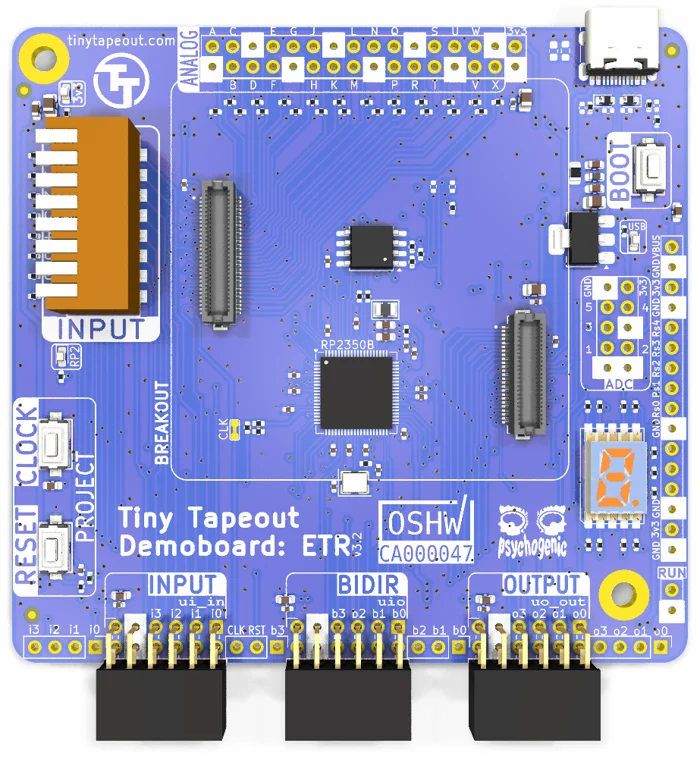

Tiny Tapeout and wafer.space are independent companies that work together (announcement). Tiny Tapeout runs its own shuttles: it takes the projects, builds the die, and sells and supports the chips and boards. wafer.space has the dies manufactured on its GF180MCU runs, and these pages are wafer.space's measurements of them. For anything about a Tiny Tapeout project, chip or order, contact Tiny Tapeout.