Tiny TapeoutMany small designs, one shared chip
6 chips · 293 different projects
Submit your design by 7 December 2026 Buy a chip and board What is Tiny Tapeout?
Start with Tiny Tapeout, then make your own chip
Tiny Tapeout puts many small designs on one chip, so a first design costs a fraction of a whole die. Many designers start with a few tiles and come back with a die of their own.
Get a Tiny Tapeout chip
Every Tiny Tapeout chip comes on a board you can plug in, with all of its projects ready to try.
Buy a chip and boardPut your design on the next one
Tiny Tapeout GF 26c and 26d take projects until 7 December 2026, to be made on wafer.space Run 3.
Submit a projectMake a whole chip of your own
When a design outgrows a few tiles, it can have a die to itself on wafer.space Run 3: orders close 9 December 2026.
Reserve a slotYour chance to be on the next one
These Tiny Tapeout chips are still taking projects, or are planned. Each will be made on a wafer.space run. Submit your design before its deadline, then find it here once the chip is made.
Taking projects
Tiny Tapeout GF 26c
To be made on wafer.space Run 3
- Projects close 7 December 2026
- 143 tiles still open of 160
- Chips expected 12 May 2027
- Shipping 9 June 2027 (estimated)
Taking projects
Tiny Tapeout GF 26d
To be made on wafer.space Run 3
- Projects close 7 December 2026
- Chips expected 12 May 2027
- Shipping 9 June 2027 (estimated)
Planned
| Chip | Projects close | Shipping (estimated) |
|---|---|---|
| Tiny Tapeout GF 27a | April 2027 (estimated) | October 2027 |
| Tiny Tapeout GF 27b | July 2027 (estimated) | January 2028 |
| Tiny Tapeout GF 27c | October 2027 (estimated) | April 2028 |
| Tiny Tapeout GF 28a | January 2028 (estimated) | June 2028 |
Which wafer.space run will make each is not yet announced.
Dates and tile counts come from Tiny Tapeout and were last updated 2026-10-24. For the latest, see Tiny Tapeout's chip schedule.
Chips made so far
Every Tiny Tapeout GF180MCU chip made so far. Open one to see each project on it: where it sits on the die, how big it is and how much logic it packs. Use them to size your own design.
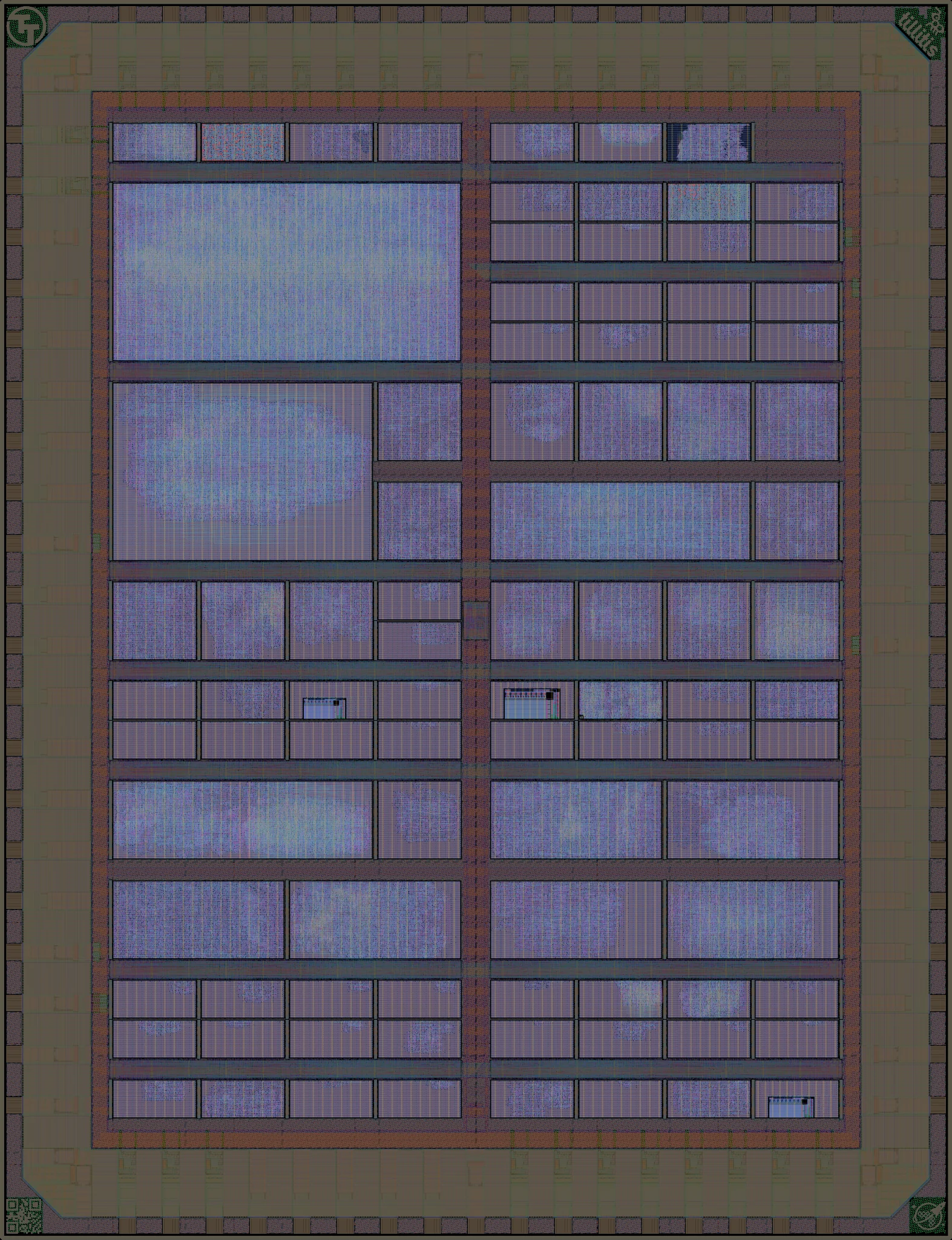 T26B
Tiny Tapeout GF 26b
Die T26B on wafer.space Run 2
90 projects · 149,377 logic cells
Next: First dies sorted (22 October 2026 (expected))
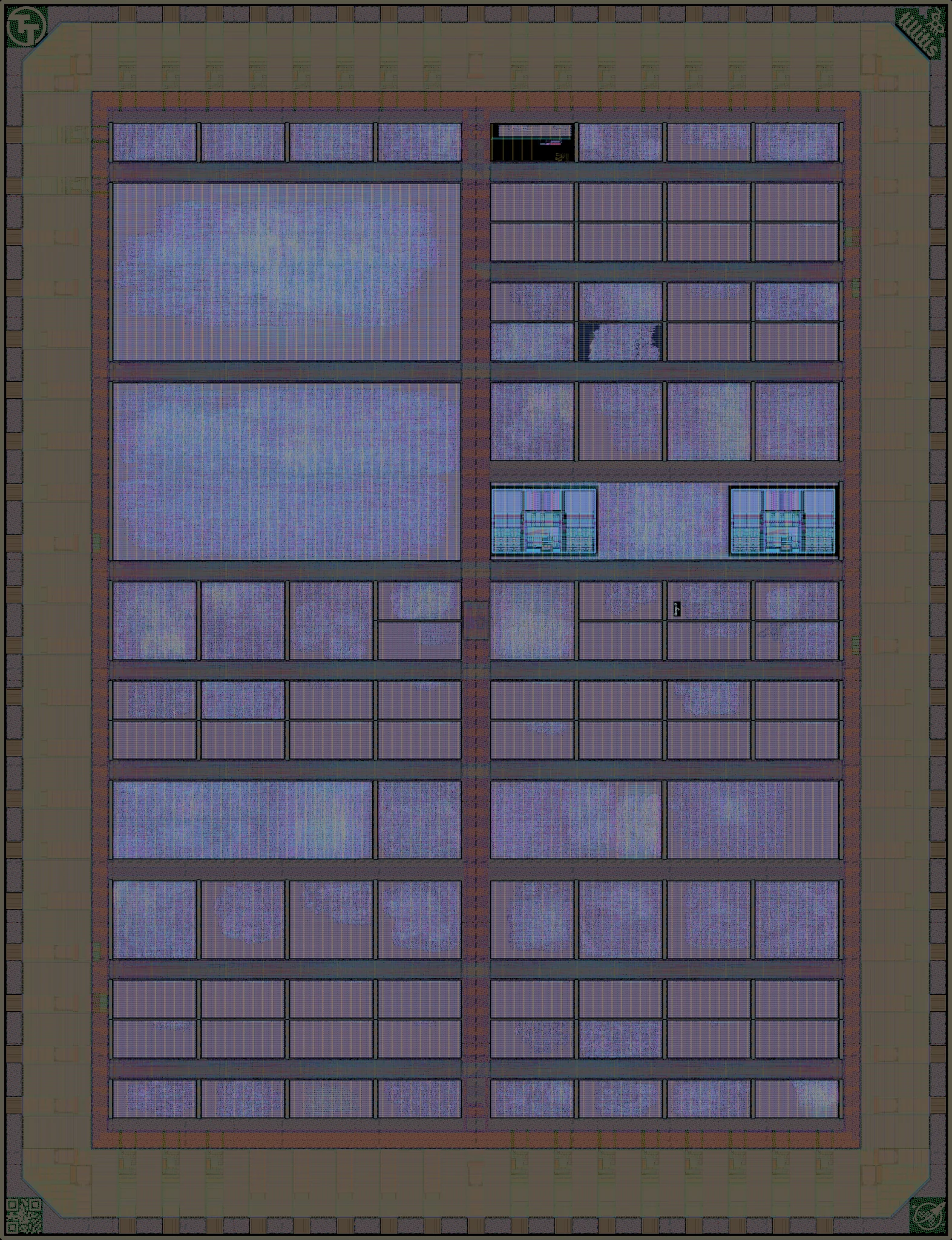 T26A
Tiny Tapeout GF 26a
Die T26A on wafer.space Run 2
95 projects · 137,835 logic cells
Next: First dies sorted (22 October 2026 (expected))
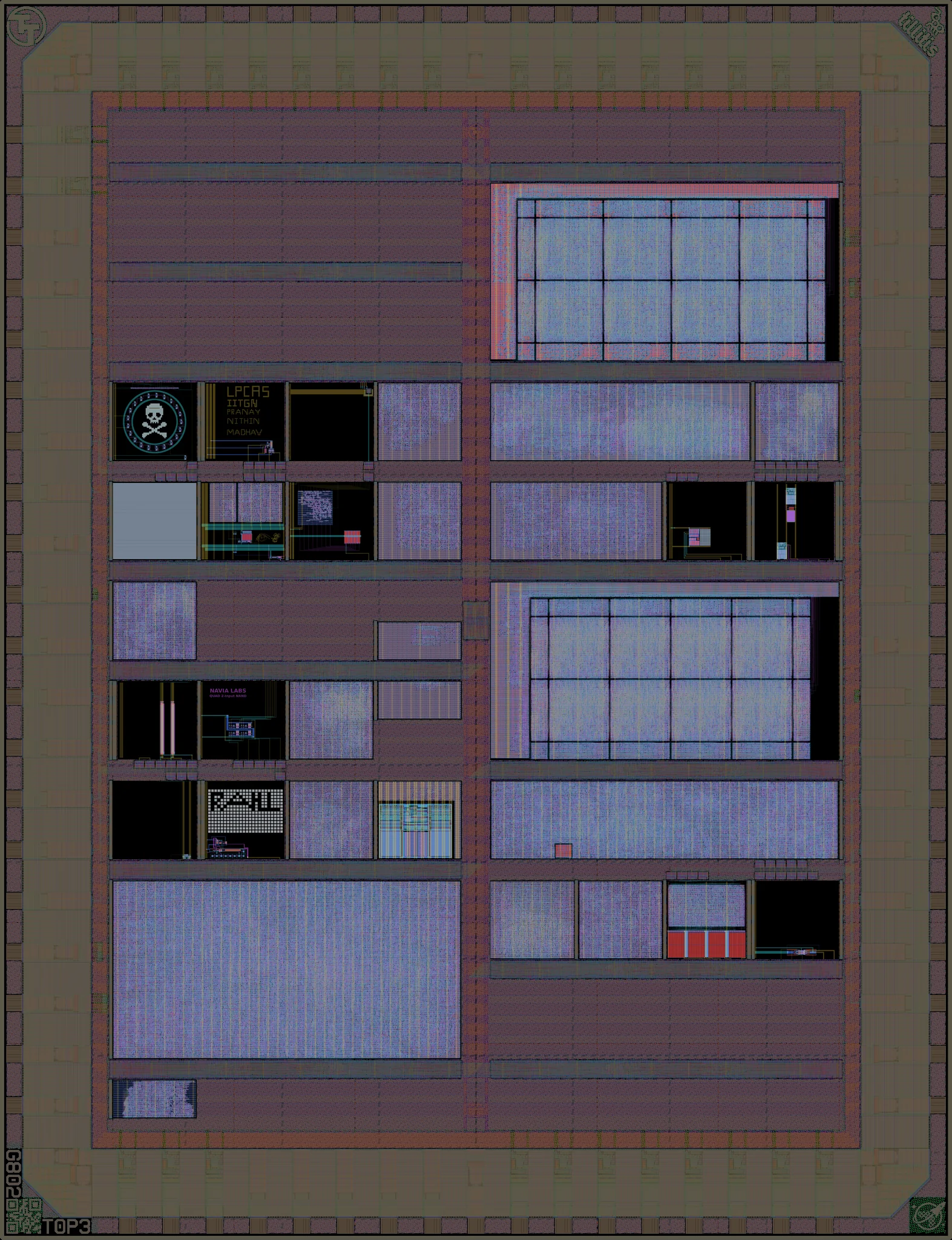 T0P3
Tiny Tapeout GF 0.3
Die T0P3 on wafer.space Run 2
32 projects · 113,169 logic cells
Next: First dies sorted (22 October 2026 (expected))
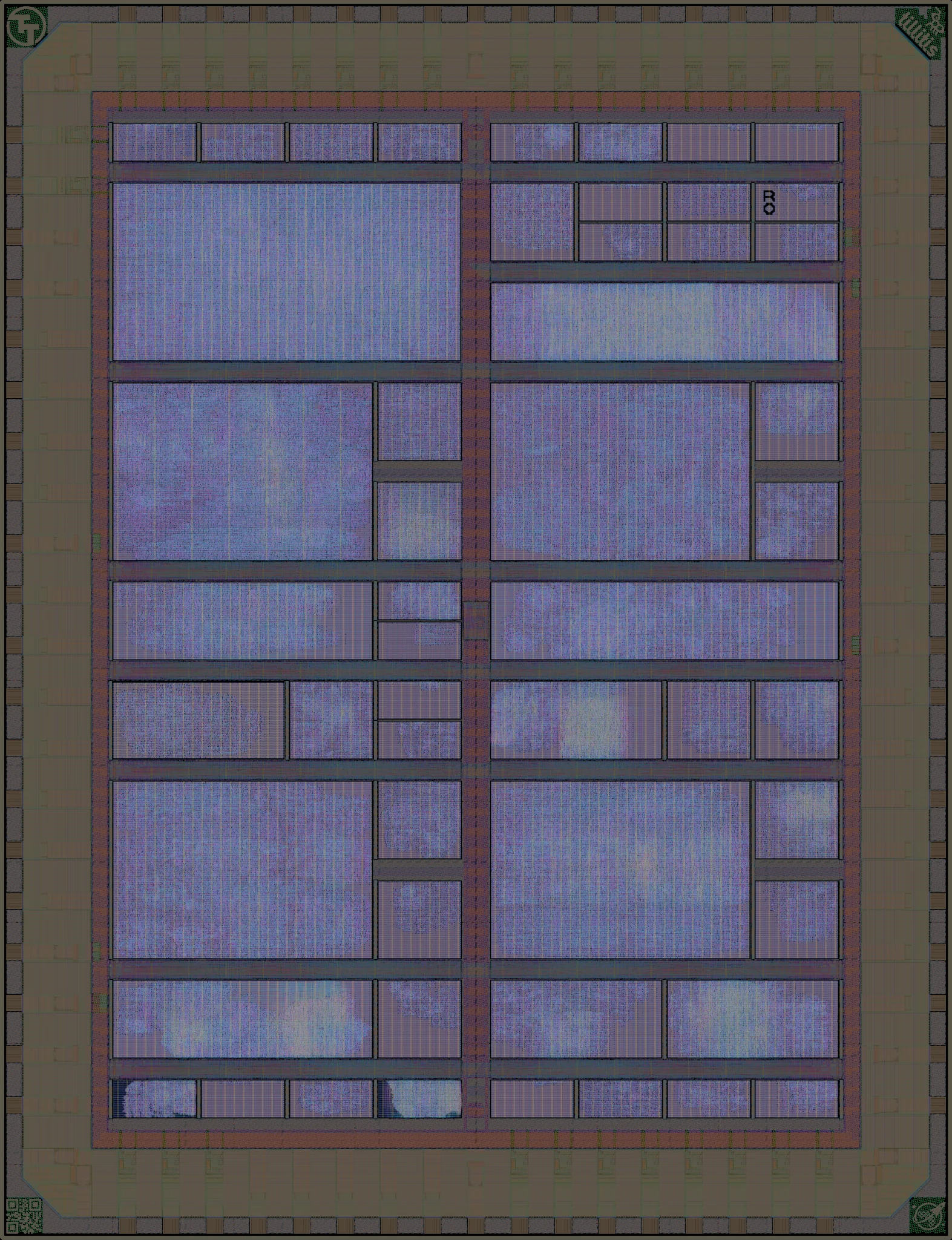 TTPG
Tiny Tapeout GF 0.2, power-gated
Die TTPG on wafer.space Run 1
52 projects · 197,196 logic cells
Next: Packaged parts shipped (31 October 2026 (expected))
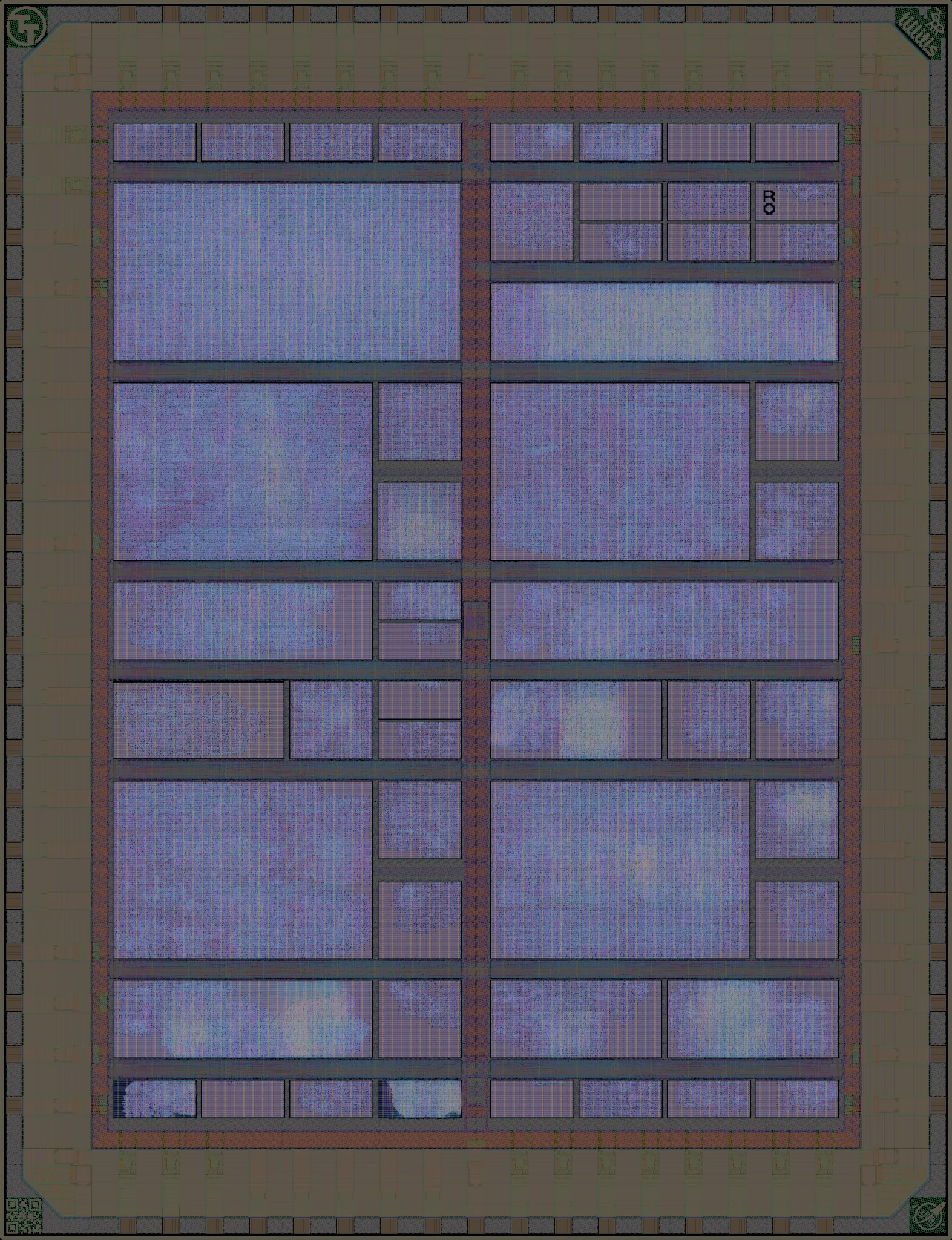 TTP2
Tiny Tapeout GF 0.2, standard
Die TTP2 on wafer.space Run 1
52 projects · 197,197 logic cells
Next: Packaged parts shipped (31 October 2026 (expected))
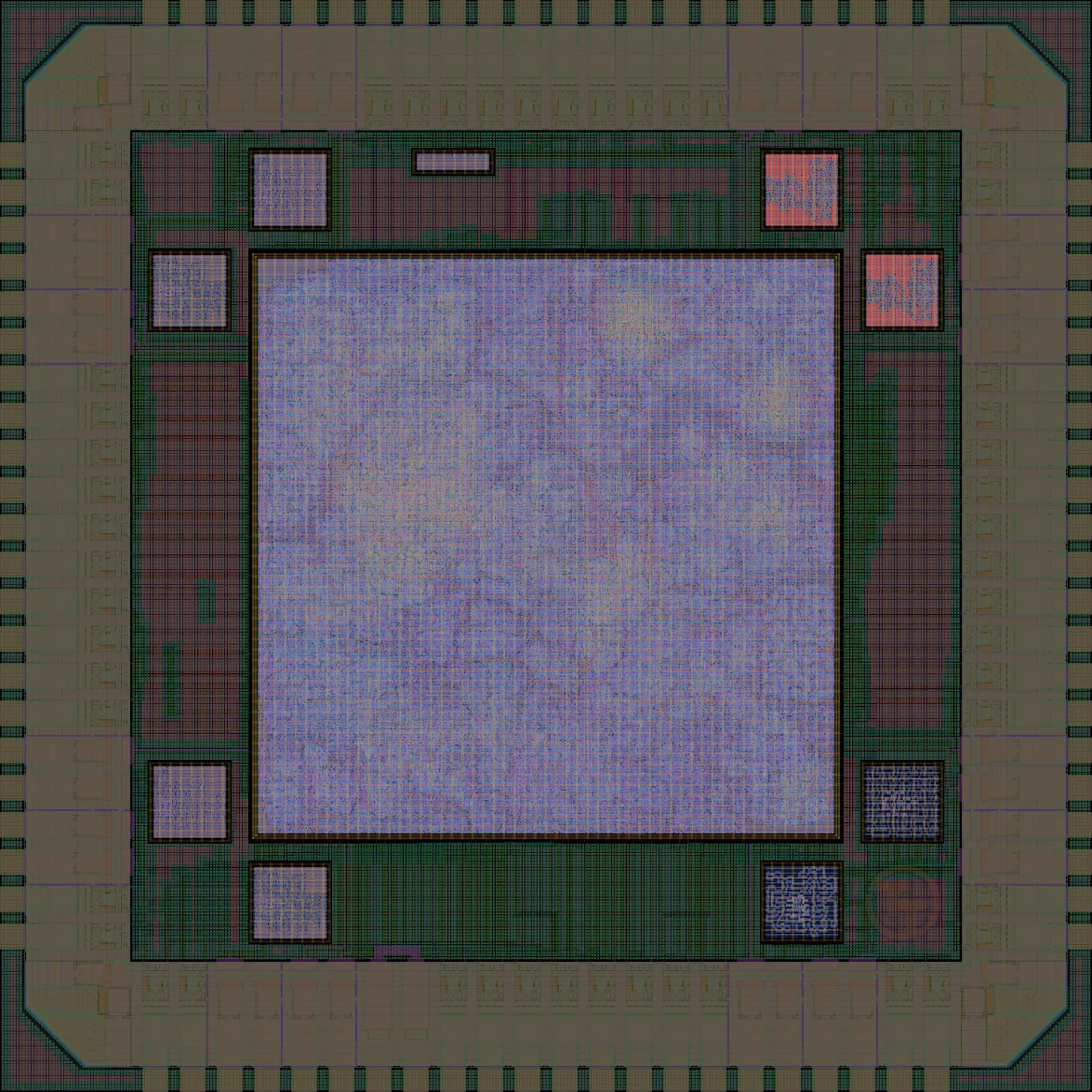 T0P1
Tiny Tapeout GF 0.1
Made on a GlobalFoundries private MPW run
24 projects · 71,617 logic cells
A test chip, never sold
From a few tiles to a die of their own
Many designers start with a few tiles on a Tiny Tapeout chip, then come back with a whole die. These designs did exactly that: each row is one design, each dot one version of it.
TinyQV RISC-V SoC
2 × 2 tiles Tiny Tapeout IHP 0.2 · Nov 2024
TinyQV RISC-V SoC
2 × 2 tiles Tiny Tapeout IHP 25a · Mar 2025
TinyQV RISC-V SoC
3 × 2 tiles Tiny Tapeout IHP 25b · Sep 2025
TinyQV - Crowdsourced RISC-V SoC
5 × 4 tiles Tiny Tapeout SKY 25a · Sep 2025
2 projects
8 × 4 tiles, 4 × 4 tiles Tiny Tapeout SKY 25b · Nov 2025
TinyQV RISC-V SoC
3 × 2 tiles Tiny Tapeout GF 0.1 · Nov 2025
TinyQV RISC-V SoC
in a shared block Tiny Tapeout GF 0.2 · Nov 2025
TinyQV RISC-V SoC
3 × 4 tiles wafer.space Run 1 · Dec 2025
3 dies
TQVA ½ × ½ slot, TQVB ½ × 1 slot, TQVC 1 × ½ slot Tiny Tapeout GF 0.3 · Jun 2026
TinyQV RISC-V SoC
4 × 2 tiles wafer.space Run 2 · Jul 2026
4 dies
TQVA ½ × ½ slot, TQVC 1 × ½ slot, TQVD ½ × ½ slot, TQVE ½ × ½ slot
KianV uLinux SoC
8 × 2 tiles Tiny Tapeout 6 · Apr 2024
KianV uLinux SoC
8 × 2 tiles Tiny Tapeout 7 · Jun 2024
KianV RISC-V RV32E Baremetal SoC
3 × 2 tiles Tiny Tapeout IHP 0.2 · Nov 2024
KianV RISC-V RV32E Baremetal SoC
4 × 2 tiles Tiny Tapeout GF 0.1 · Nov 2025
KianV uLinux SoC
in a shared block Tiny Tapeout GF 0.2 · Nov 2025
KianV uLinux SoC
4 × 4 tiles wafer.space Run 1 · Dec 2025
KIAN KianV: A 32-bit RISC-V Linux SoC taped out on GF180MCU
1 × 1 slot Tiny Tapeout IHP 26a · Mar 2026
KianV SV32 TT Linux SoC
8 × 4 tiles Tiny Tapeout GF 0.3 · Jun 2026
KianV uLinux SoC
4 × 4 tiles wafer.space Run 2 · Jul 2026
KIAN KianV: A 32-bit RISC-V Linux SoC taped out on GF180MCU Run 2
1 × 1 slot
Zilog Z80
2 × 2 tiles Tiny Tapeout IHP 0.2 · Nov 2024
Zilog Z80
2 × 2 tiles Tiny Tapeout 9 · Nov 2024
Zilog Z80
2 × 2 tiles Tiny Tapeout IHP 25a · Mar 2025
Zilog Z80
2 × 2 tiles Tiny Tapeout GF 0.2 · Nov 2025
Zilog Z80
2 × 2 tiles wafer.space Run 1 · Dec 2025
2 dies
HZ80 ½ × 1 slot, RZ80 1 × 1 slot wafer.space Run 2 · Jul 2026
2 dies
HZ80 ½ × 1 slot, QZ80 ½ × ½ slot
raybox-zero
4 × 2 tiles Tiny Tapeout 7 · Jun 2024
raybox-zero TT07 edition
6 × 2 tiles Tiny Tapeout IHP 0.2 · Nov 2024
raybox-zero TTIHP0p2 edition
4 × 2 tiles Tiny Tapeout GF 0.1 · Nov 2025
raybox-zero TT07 edition
in a shared block Tiny Tapeout GF 0.2 · Nov 2025
raybox-zero TTGF0p2 edition
3 × 4 tiles Tiny Tapeout IHP 0.4 · Mar 2026
raybox-zero TTIHP0p4 edition
6 × 2 tiles wafer.space Run 2 · Jul 2026
AMM1 raybox-zero wafer.space run 2 half height
1 × ½ slot
serv - Serial RISC-V CPU
1 × 1 tile Google GFMPW-0 · Dec 2022
6079 Serv tri-core (GF180 MPW0 Serv)
Caravel chip Tiny Tapeout 3 · Apr 2023
serv - Serial RISC-V CPU
1 × 1 tile wafer.space Run 1 · Dec 2025
3 dies
GD02 ½ × 1 slot, GD03 1 × 1 slot, GD04 1 × ½ slot wafer.space Run 2 · Jul 2026
GD04 Racquet Wide 1x0.5
1 × ½ slot
Tiny Tapeout tile
Google shuttle
wafer.space die
Each marker is one version of the design: hover over it or focus it for details, and select it to open its
page. On a phone, the table below lists every one.
As a table
What is Tiny Tapeout?
Tiny Tapeout is the quickest and cheapest way to get your own design made on a real chip.
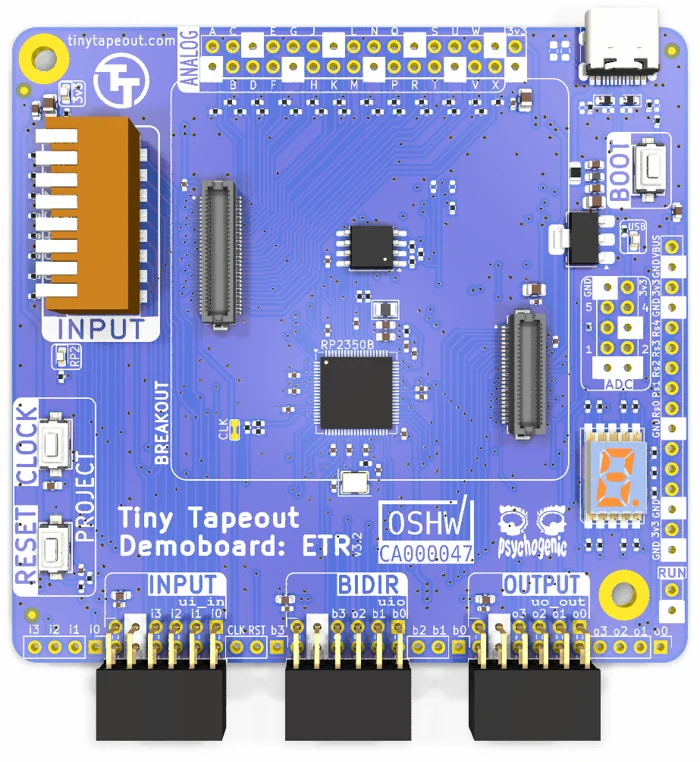
Many designs share one Tiny Tapeout chip. Each project gets one or more small tiles, and a multiplexer on the chip connects the one you choose to the pins. Draw your first design in the browser with no experience by following the digital design guide, or write it in Verilog or another HDL; Tiny Tapeout's templates build and check it on GitHub. The chip comes on a demo board that selects your design and drives it.
Tiny Tapeout also runs workshops and supports teaching in universities and schools. Browse every Tiny Tapeout chip and the projects proven in silicon, or read the Tiny Tapeout FAQ.

Tiny Tapeout and wafer.space are independent companies that work together (announcement). Tiny Tapeout runs its own shuttles: it takes the projects, builds the die, and sells and supports the chips and boards. wafer.space has the dies manufactured on its GF180MCU runs, and these pages are wafer.space's measurements of them. For anything about a Tiny Tapeout project, chip or order, contact Tiny Tapeout.