
wafer.space x Tiny Tapeout - Hackaday 2026 Collaboration#
Earlier this year the wafer.space team attended Hackaday Europe 2026, and if you did too, then your swag bag had a bit of open source silicon inside!
A close-up image of the TTGF0p2 chip breakout boards
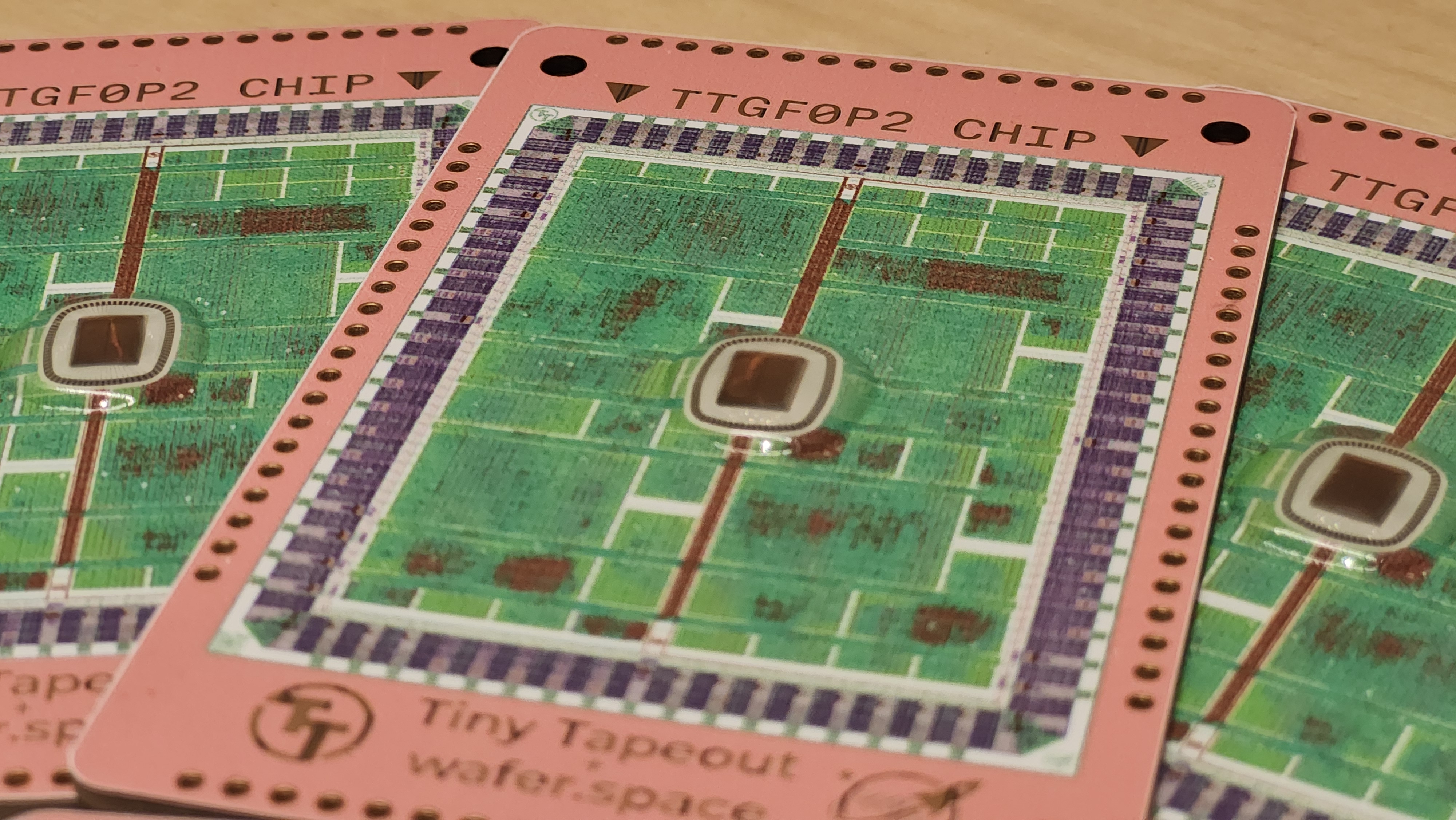
Made in collaboration with Tiny Tapeout, these credit card sized breakout boards contain an exposed TTGF0p2 die. This is an experimental shuttle run by Tiny Tapeout, containing 52 unique open source designs, including a ring oscillator, Zilog Z80 replica, TinyQV (a RISC-V processor) and many visual VGA demos.
Have you tried any of these projects yet? Let us know in the wafer.space Discord and in the Tiny Tapeout Discord!
Let’s take a look at how they were made.
Behind the Scenes#
Tiny Tapeout opened the TTGF0p2 shuttle back in November 2025, where users could submit designs for free onto the shuttle
due to its experimental nature. It was only available for 18 days, but it filled up quickly. Once the deadline arrived,
TTGF0p2 was submitted onto Run #1 as TTPG and TTP2.
TTP2 dies ready for processing
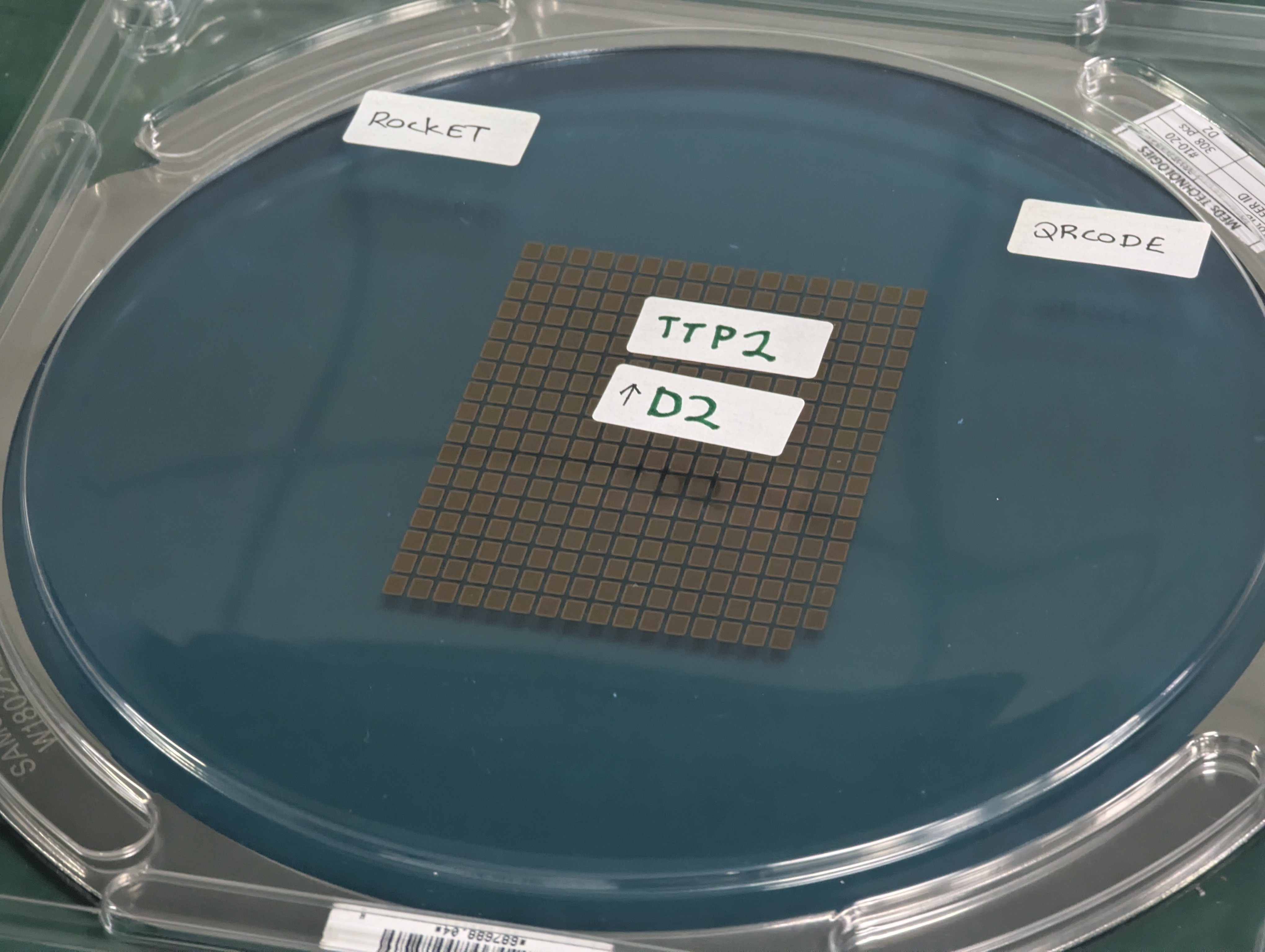
Whilst Run #1 was being manufactured, the Tiny Tapeout team got to work on designing a colorful breakout board. Mounted front and center is the die itself, covered with a glob of transparent epoxy. With a good enough eye (or a decent microscope), you should be able to make out the tiny wire bonds that physically connect the die to the pins around the edge of the breakout board. Surrounding the die is a render of the physical chip layout, where you can make out each individual project (in green blocks) and the padring (in purple).
Blank breakout boards
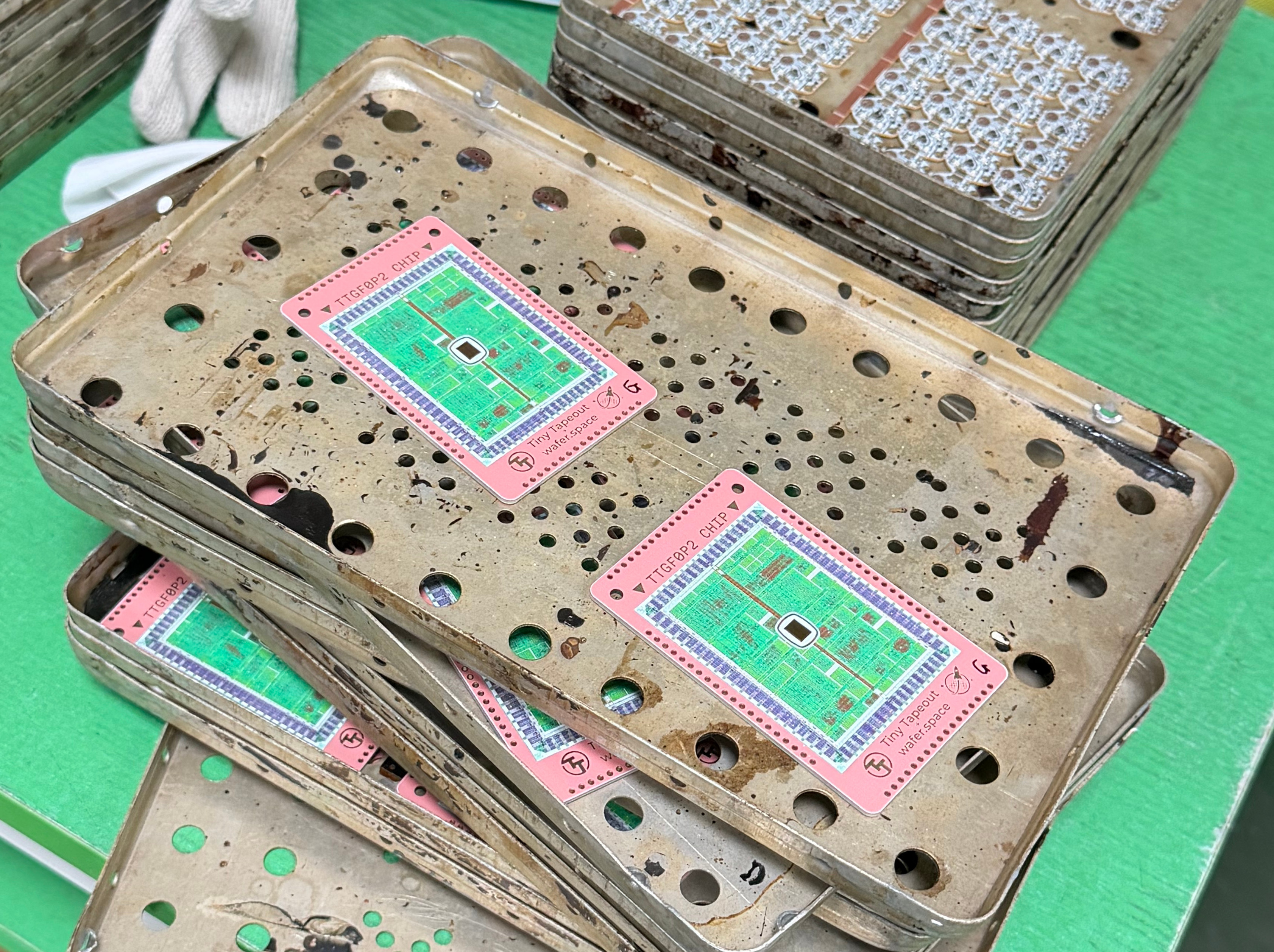
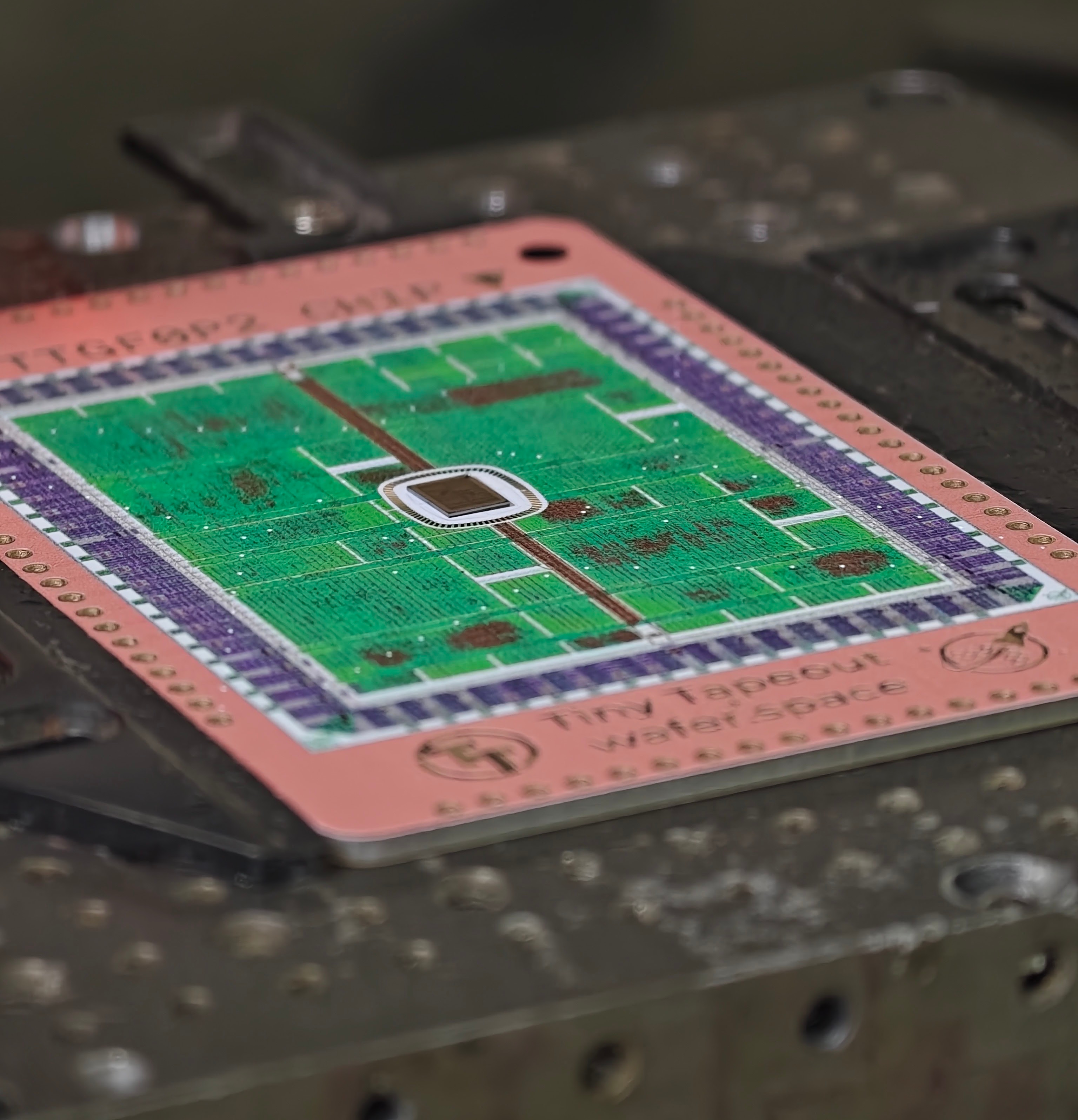
The die is epoxied to the breakout board, and then mounted on a metal jig. This jig will help hold it in place while the wire bonds are performed.
A breakout board with a die, mounted in a metal jig
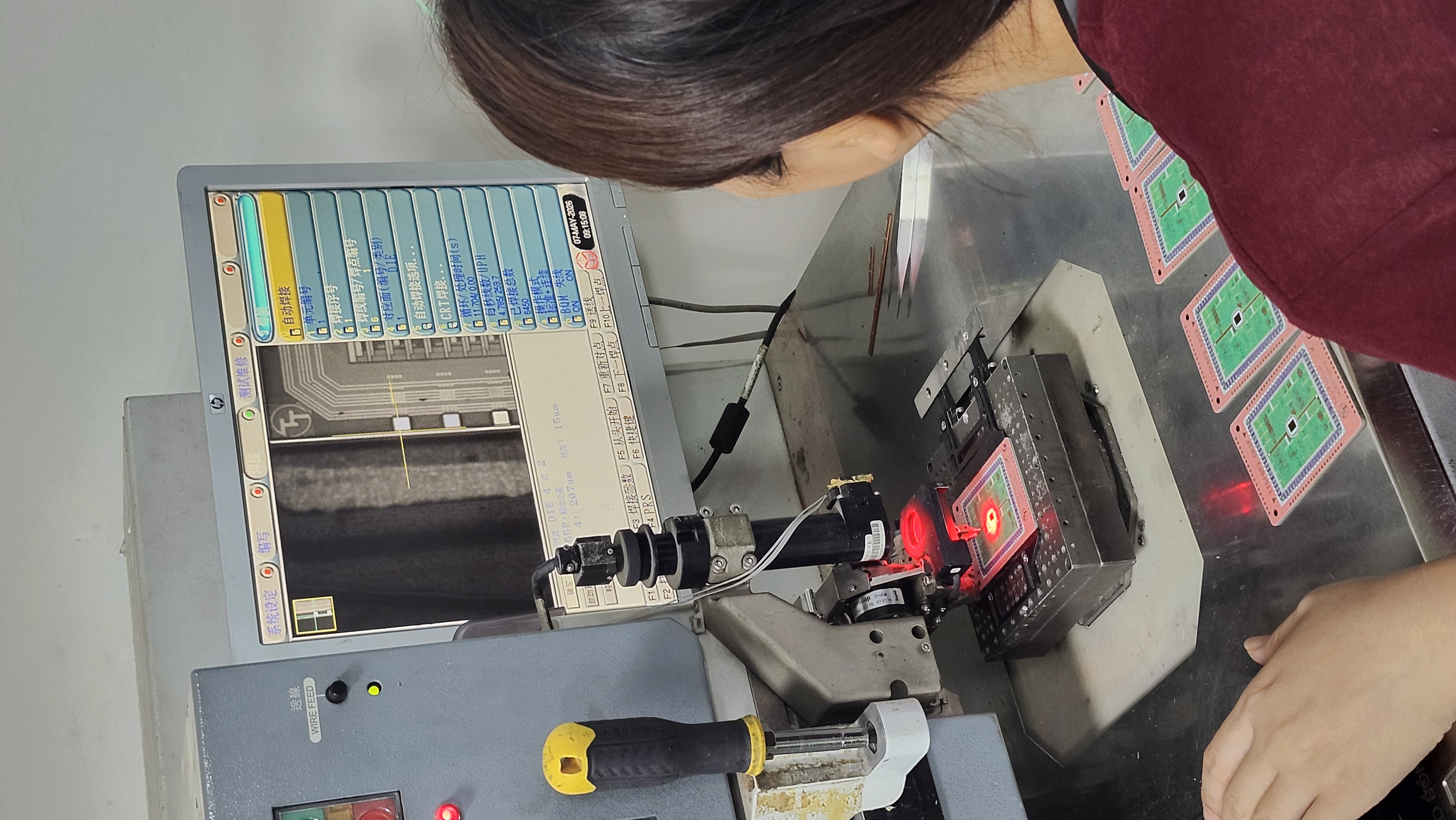
The wire bonds are then programmed into the machine by the operator following a specification.
The operator programming the wire bond locations, the Tiny Tapeout logo on the die is visible on the screen
wafer.space dies contain some area in the corners where artwork can be placed – for this die, both the Tiny Tapeout and wafer.space logos are visible.
wafer.space and Tiny Tapeout logos visible on the die through a microscope
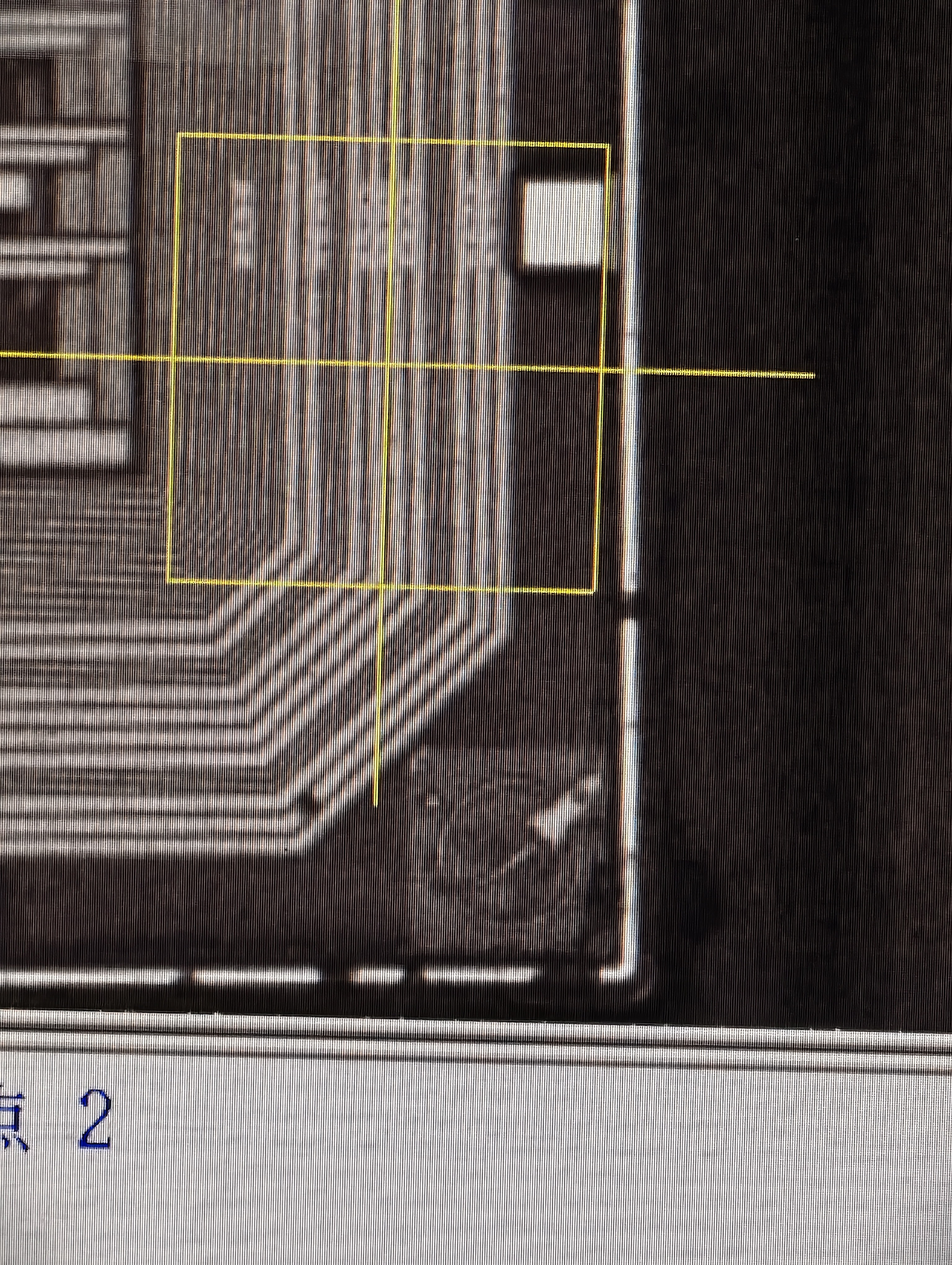
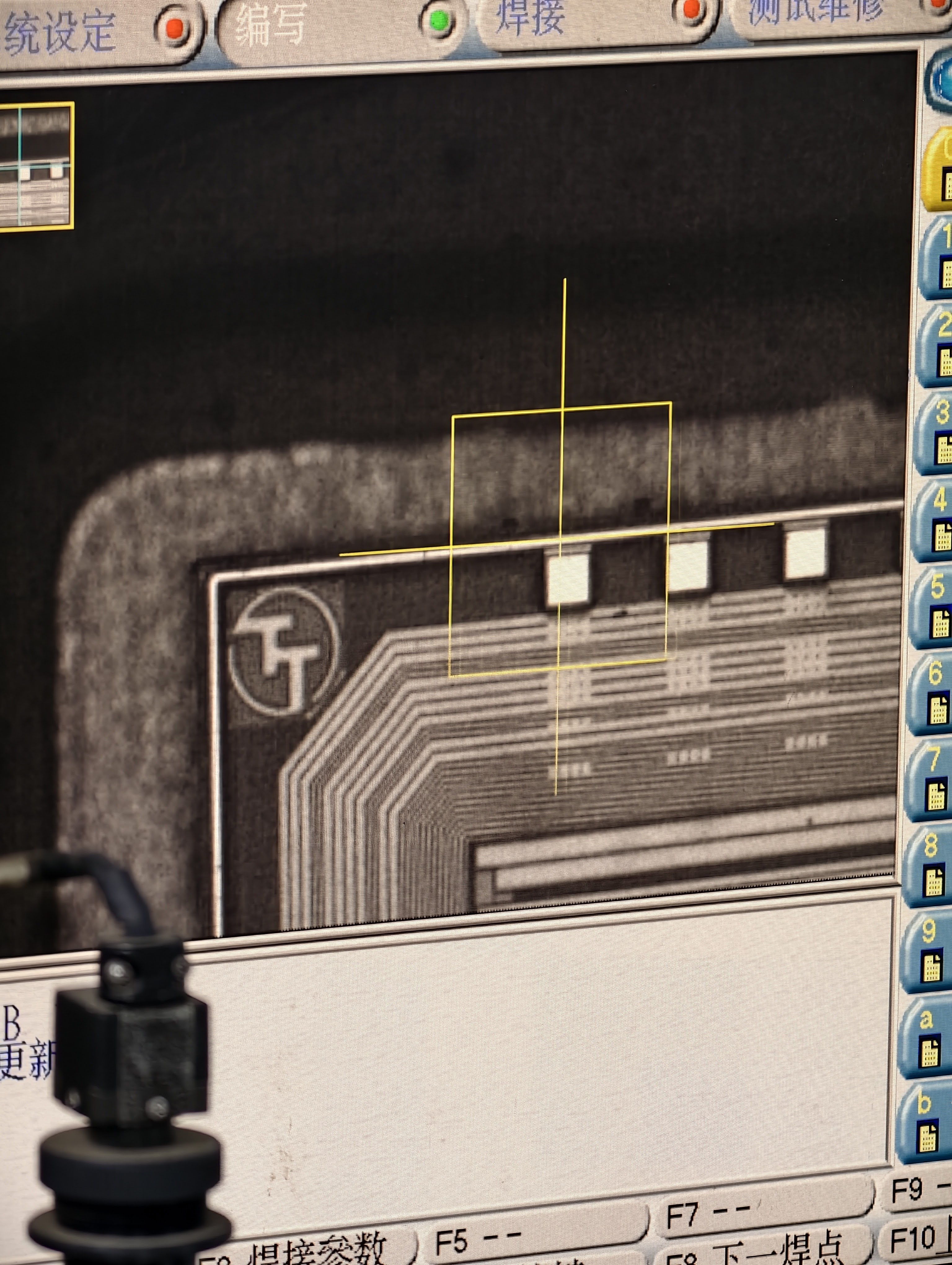
After wire bonding, the breakout boards are carefully put aside for the next step – covering the die and wire bonds with a protective transparent epoxy. But not before some pictures!
Wide shot of the breakout board and its die
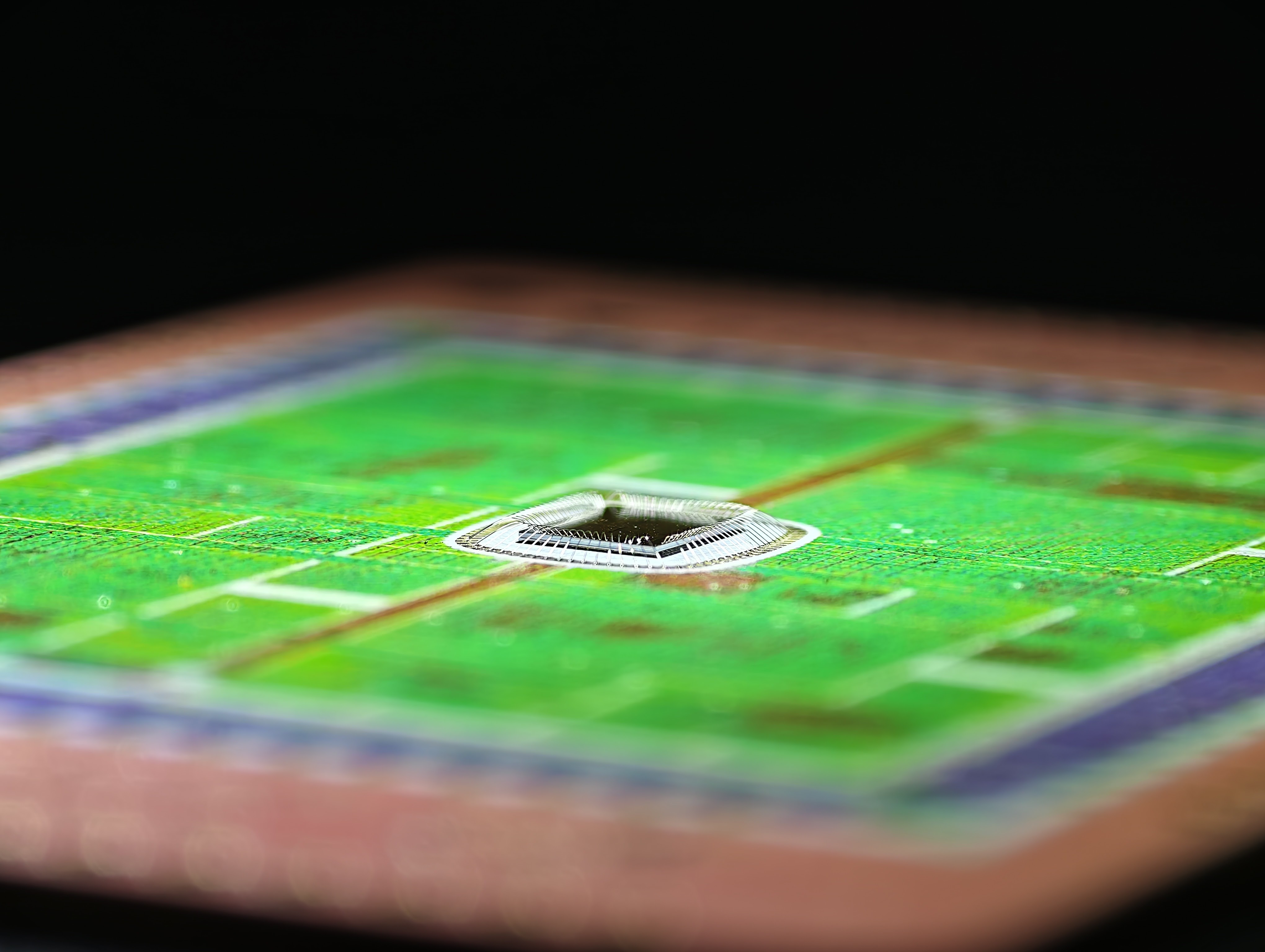
Close-up shots of the die -- note how delicate and thin the wire bonds are
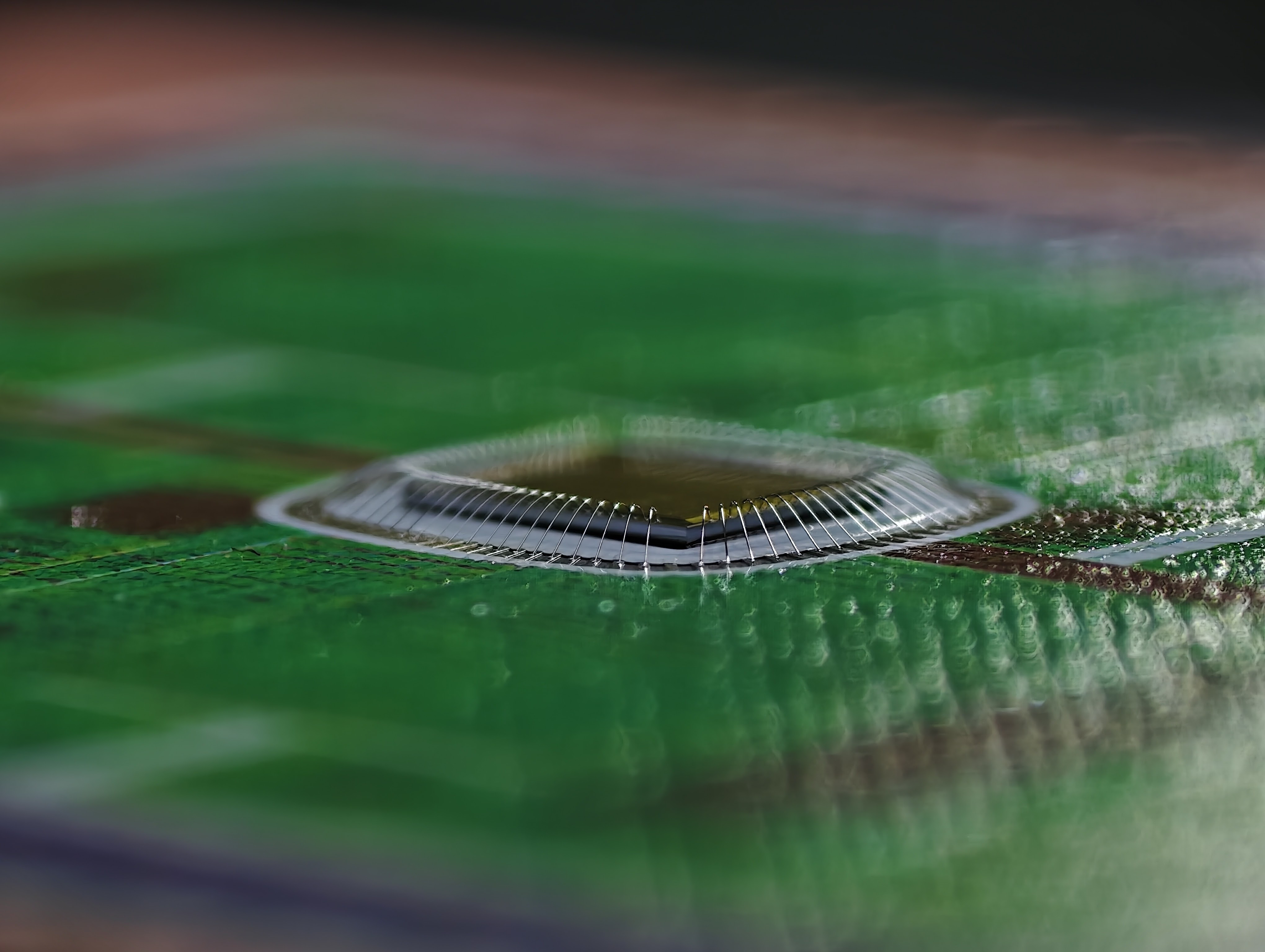
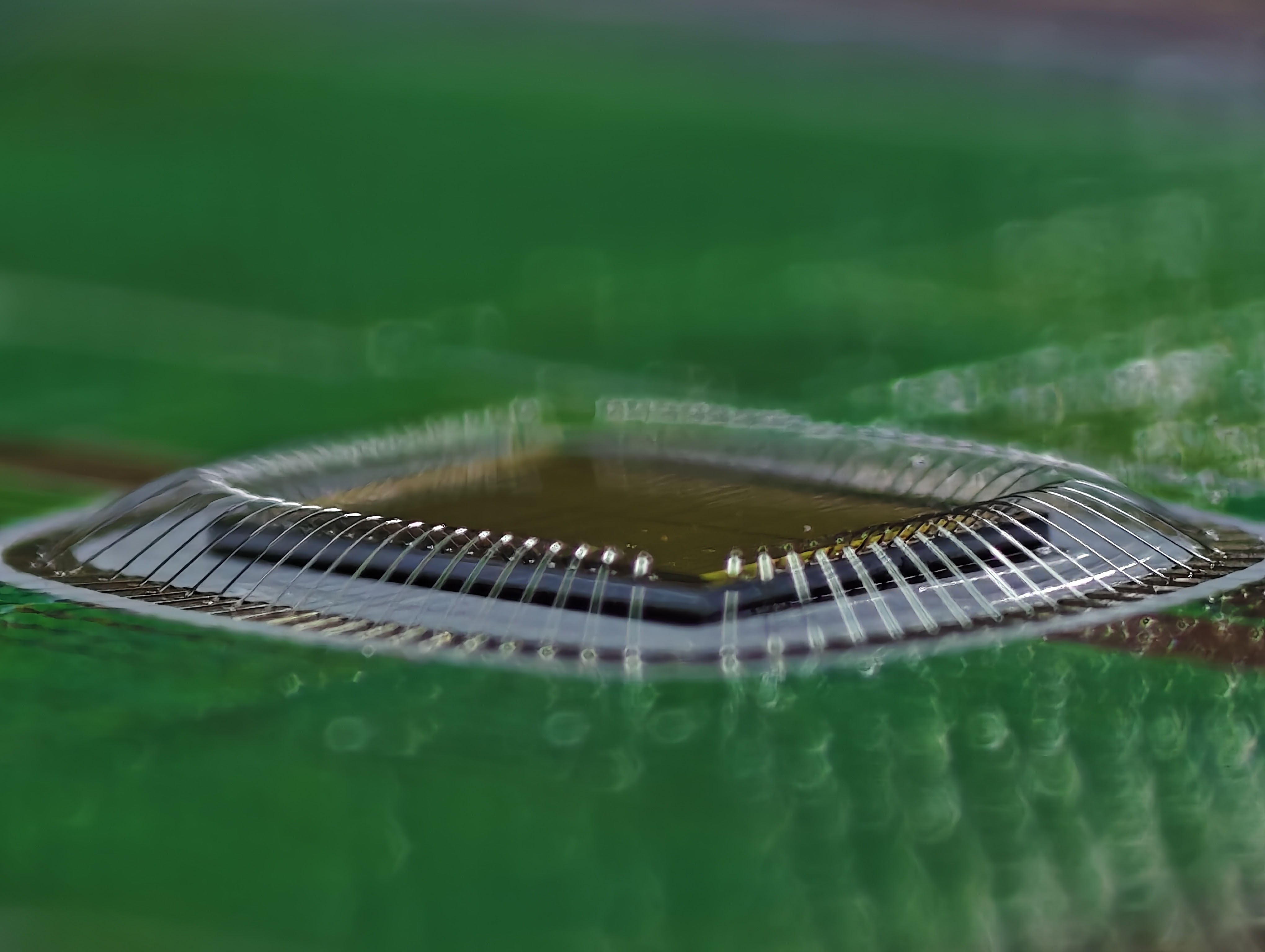
Epoxy is mixed and then poured into a syringe. It will be manually applied for every board.
Breakout boards sitting on a tray ready for the epoxy treatment
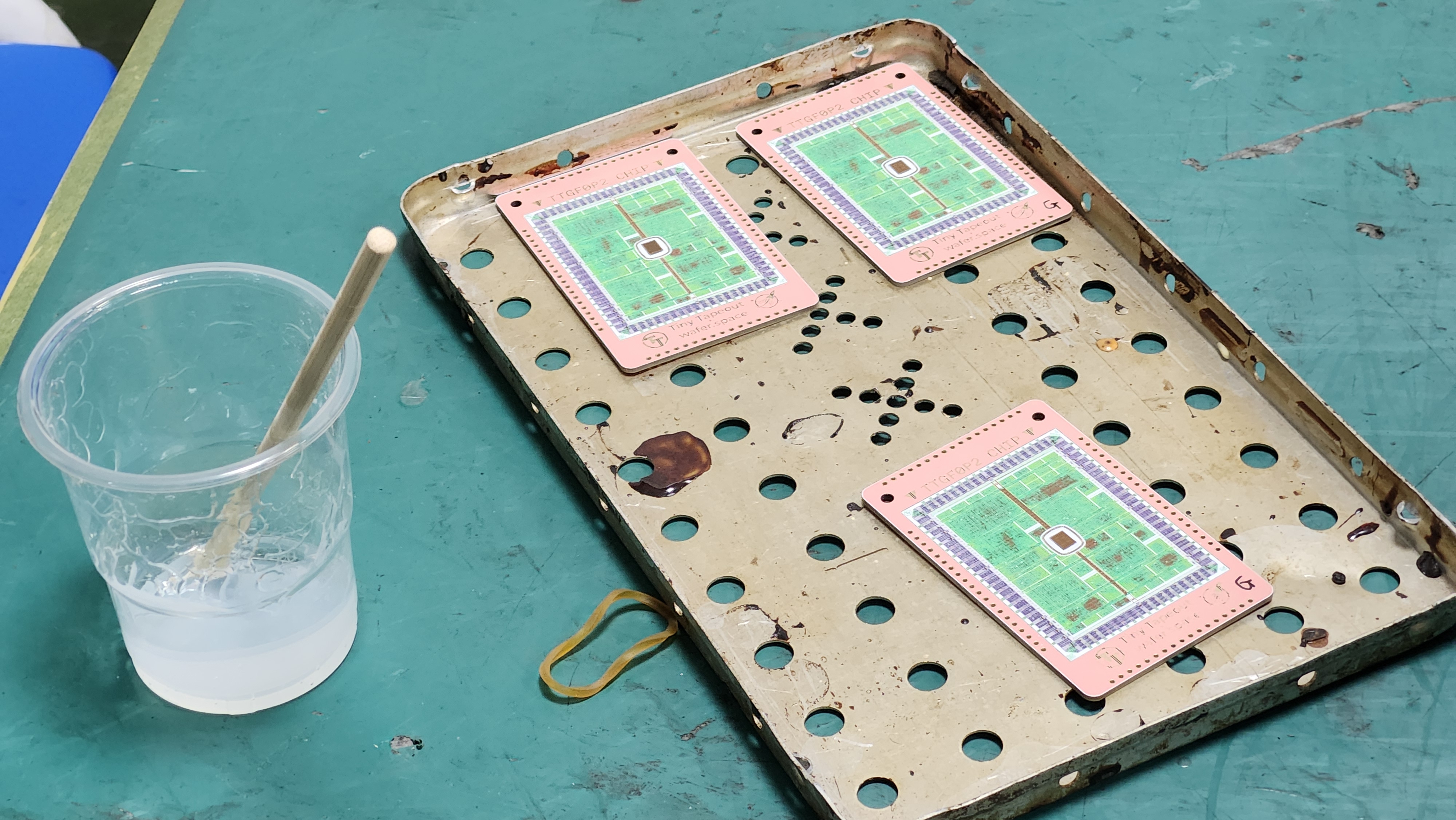
These are then moved into an oven for curing, and a vacuum is pulled to ensure that the epoxy is properly degassed.
A finished batch of breakout boards, destined for Hackaday Europe 2026
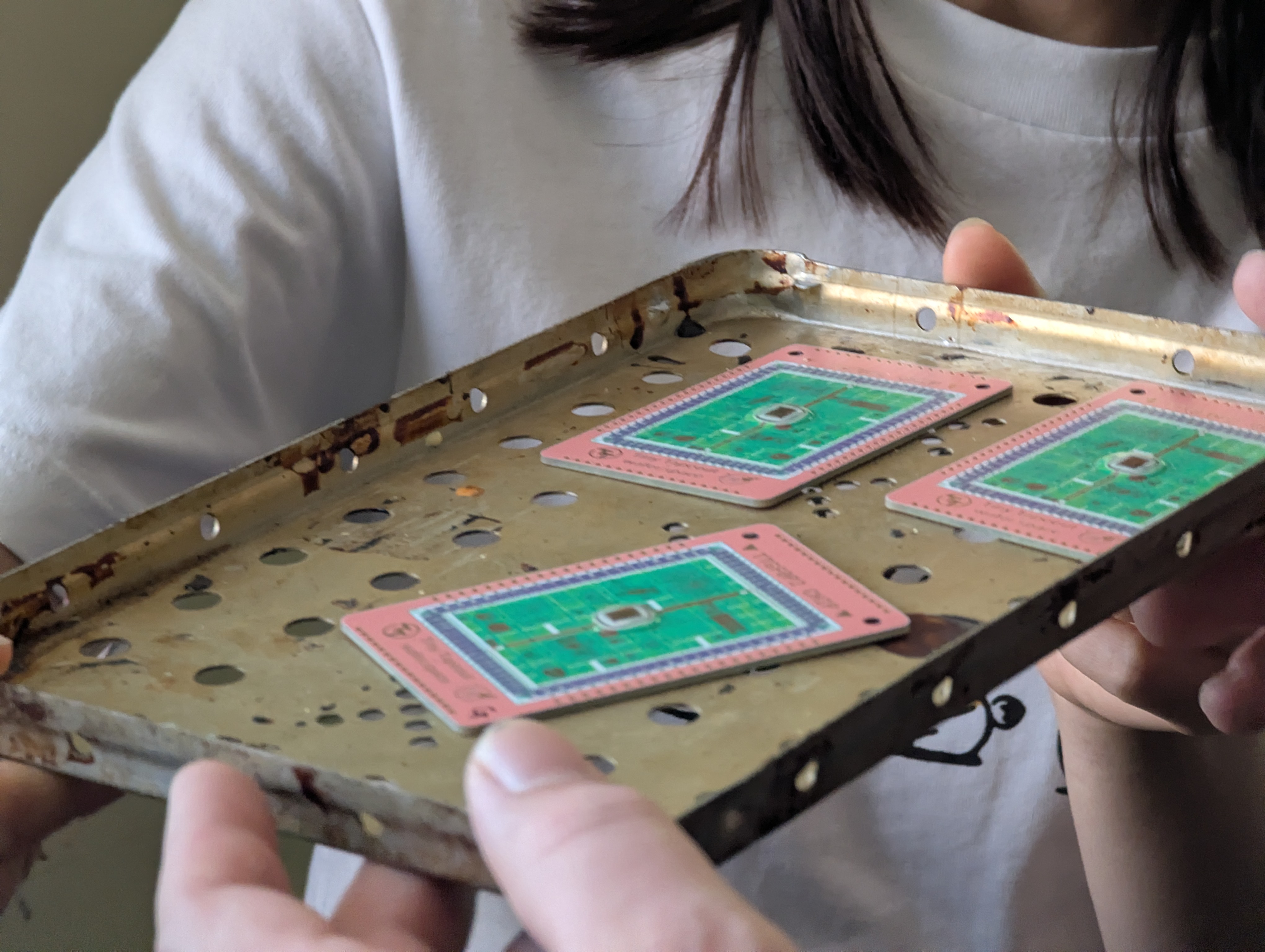
Rinse and repeat a few more times, and eventually you’ll have enough to give out one to each attendee of Hackaday Europe 2026.
The process here is quite similar to what we already do for our chip-on-board packaging option, but you should check out our update on it for more close-ups!
Get Started Today#
Tiny Tapeout will be at Pasadena, CA for the 2026 Hackaday Supercon with a bunch more breakout boards — come for a chance of getting your very own!
Read more on our Crowd Supply page, jump in with our project template and join our community Discord to chat to other designers and get help.