
Campaign Update: Building Real Sensors with GF180MCU — See What's Possible!#
Hey everyone! 👋
As we get closer to our December 3rd tape-in deadline (that’s coming up fast!), I wanted to share something that really shows the power of what you can build with the GF180MCU process we’re pooling together.
Real Silicon, Real Applications#
Saligane’s group at the University of Michigan - now at Brown University - recently published a paper in IEEE Solid-State Circuits Magazine showing off an analog front-end (AFE) chip they designed entirely with open-source tools on GF180MCU. And it’s not just a test chip — they’re using it to read out flexible laser-induced graphene sensors for wearables!
The fabricated GF180MCU chip showing OPAMP blocks, SAR ADC, and switched-capacitance circuits
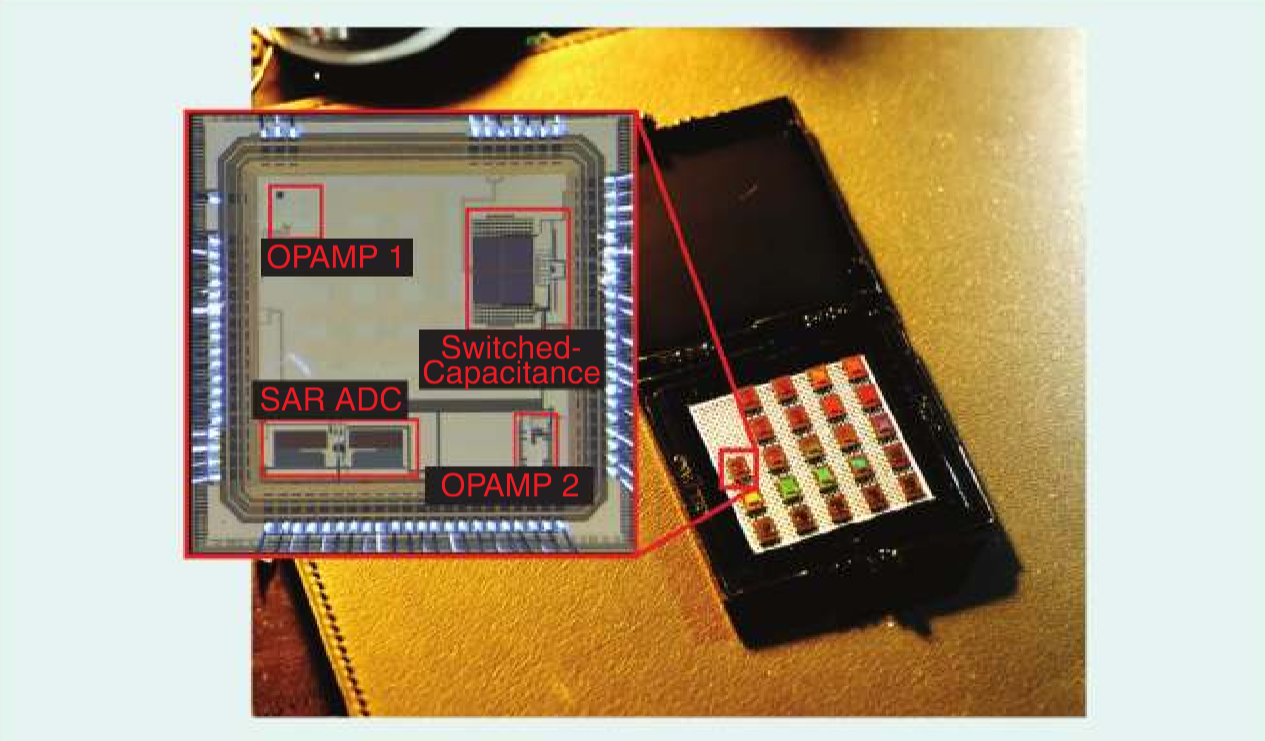
(View high-resolution die photography on Silicon Prawn)
The chip integrates operational amplifiers, a 14-bit SAR ADC, and a capacitive DAC to create a complete sensor readout platform. They demonstrated it working with:
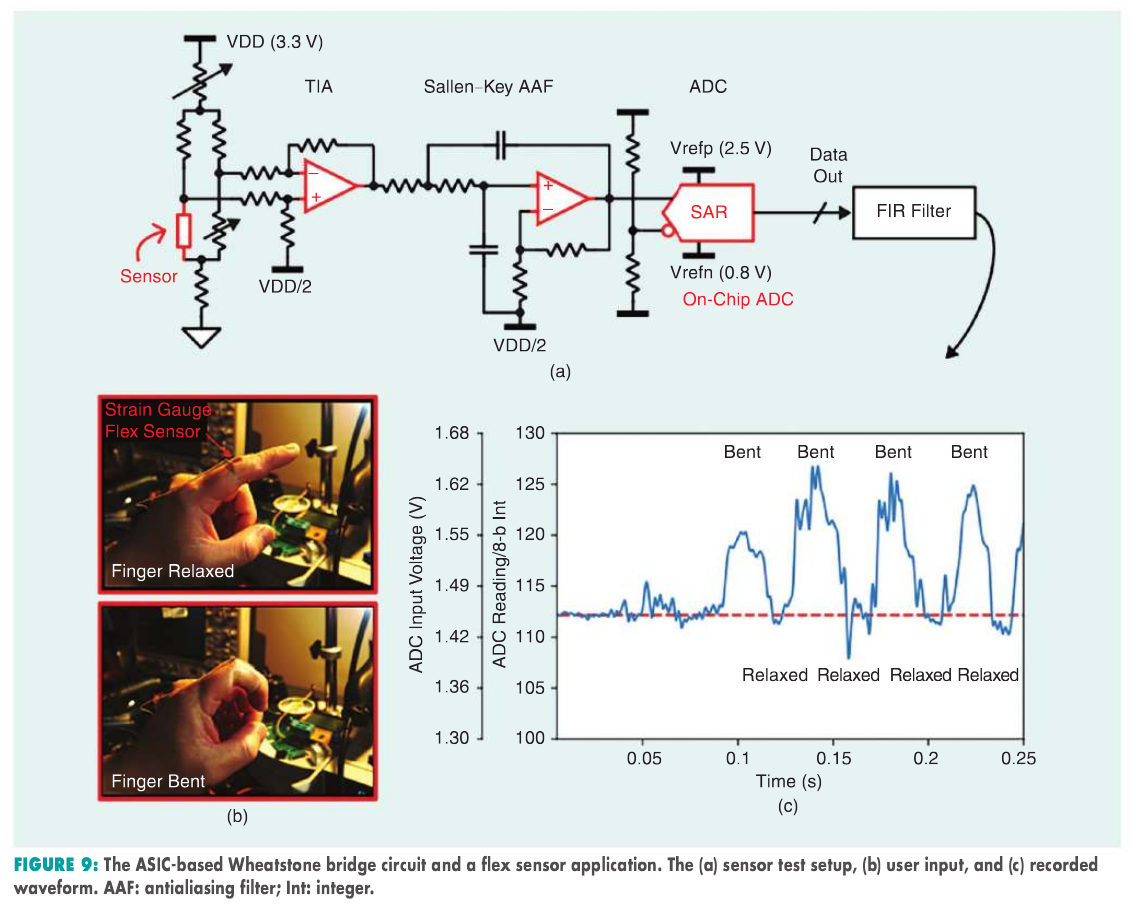
- Strain/flex sensors (detecting finger bending in real-time)
- Temperature sensors (tracking body temperature with 0.9989 R² accuracy)
- Multi-modal sensing (combining different sensor types on one platform)
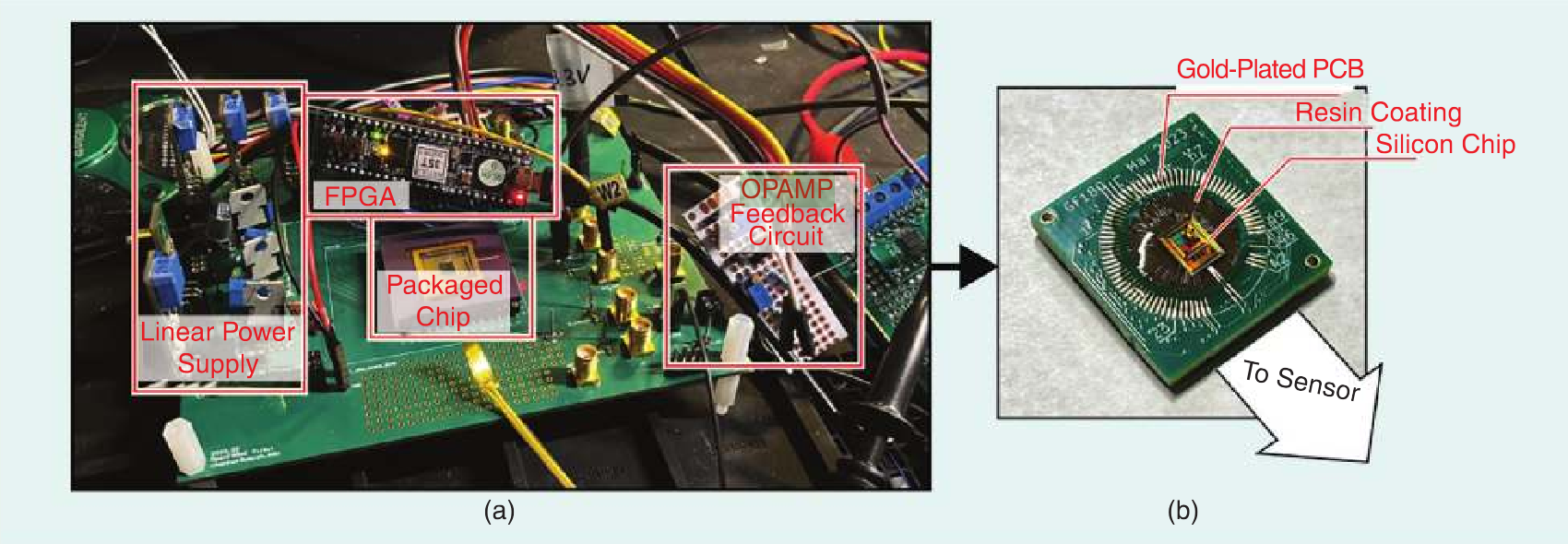
The fabricated chip wire-bonded to a PCB, ready to interface with flexible sensor patches
The Open Source Flow Works!#
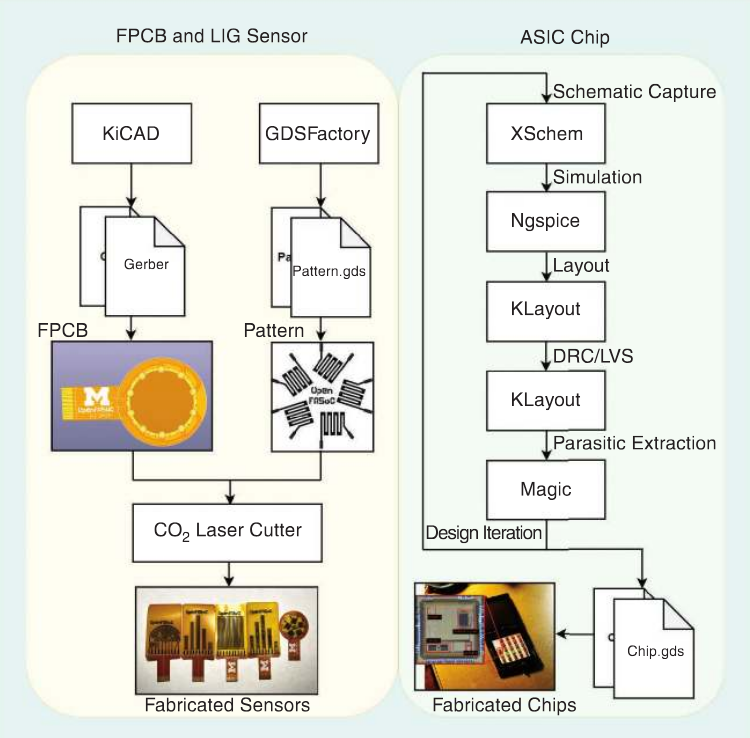
What’s exciting is they used the exact same open-source toolchain you have access to:
- XSchem for schematic capture
- Ngspice for simulation
- KLayout and Magic for layout
- Standard DRC/LVS checks
They’ve published their designs on GitHub in the OpenFASoC-Tapeouts repository, and the final submission is available on foss-eda-tools, which means you can actually look at exactly how they did it.
The complete open-source analog design flow used for this project
Reuse, Don’t Reinvent!#
This is where it gets really interesting for your designs. The OpenFASoC project provides building blocks you can directly reuse:
- Folded-cascode OPAMP with programmable bias for noise/power trade-offs
- 14-bit SAR ADC (asynchronous, monotonic switching)
- Bootstrapper and switch circuits for high-performance sampling
- Comparator circuits (double-tail latch and StrongArm topologies)
You can literally take their GDSII files, study their layout techniques, and adapt their circuits for your own sensor applications. Need to read out a resistive sensor? Temperature probe? Custom transducer? The hard work of building reliable analog blocks is already done.
Real-time flex sensor demonstration showing finger bending detection with the AFE chip
What Could You Build?#
Think about applications like:
- Environmental monitoring devices
- Biomedical wearables
- Industrial sensor nodes
- Custom instrumentation
- IoT edge devices with analog sensing
With GF180MCU’s 5 metal layers, MIM capacitors, multiple resistor types, and mixed-signal capabilities, you have everything needed for serious analog and mixed-signal designs.
Get Inspired, Get Building#
Check out the full paper to see detailed schematics, measurement results, and their complete design flow. This is real silicon, designed with open tools, doing real work — exactly what we’re enabling with this pooled run.
Questions about the campaign or getting started with GF180MCU? Hit reply or join our community discussions!
- Tim “mithro” Ansell
P.S. — If you haven’t reserved your slot yet, head over to buy.wafer.space before November 28th. After that, you’ll be waiting for Run 2!